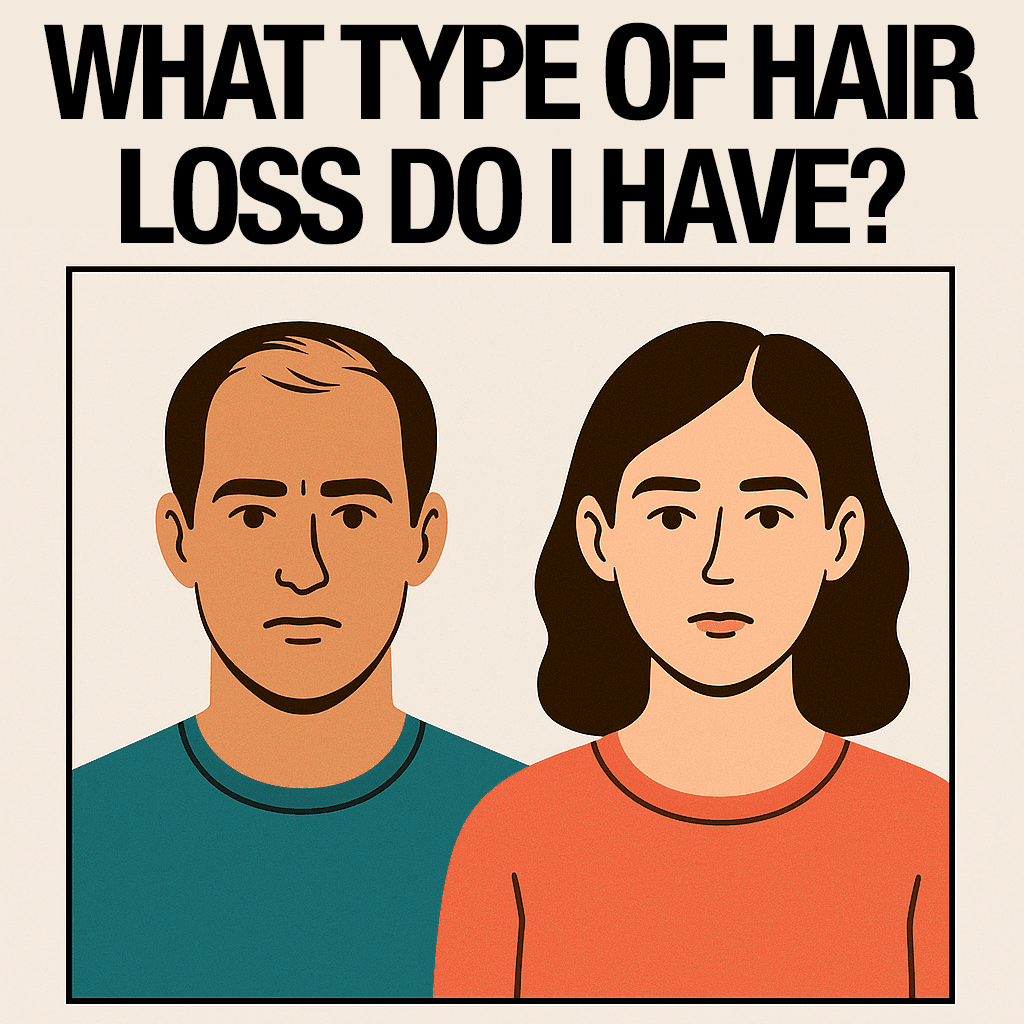
Hair loss can show up in many ways. It may begin at the hairline, crown, sides, or back of the scalp. It can be in one spot, several spots at once, concentrated, or diffuse. The most common type, called androgenetic alopecia (often referred to as male or female pattern hair loss), accounts for roughly 95% of all cases.
This guide breaks down the most common patterns we see in the clinic in plain language, and what steps you can take next.

Common Hair Loss Patterns in Men
Men typically lose their hair in the ways below:
-
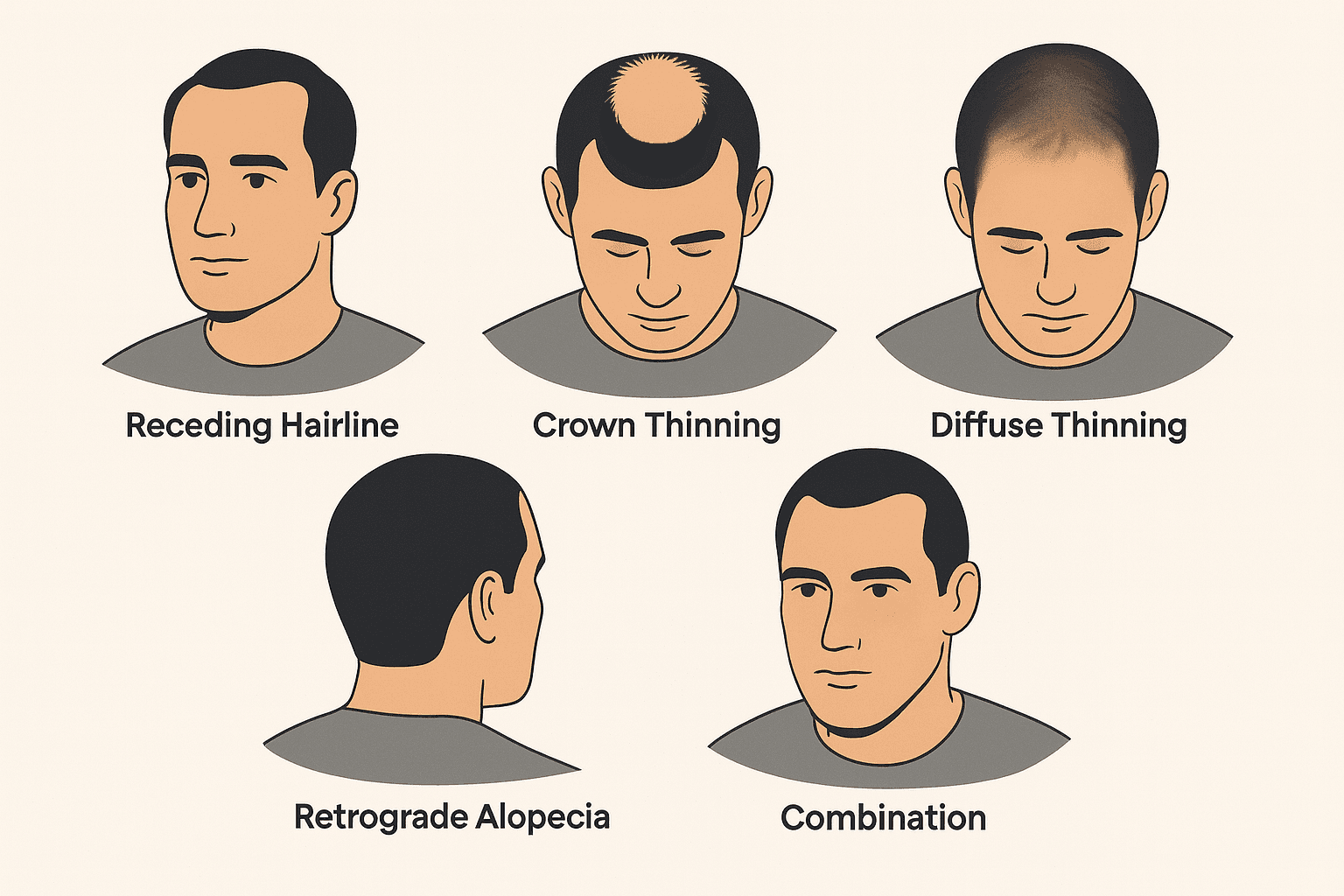
Receding hairline: Hair above the temples thins first and gradually moves back.
-
Crown thinning: Hair loss begins at the crown (top/vertex) and spreads outward.
-
Diffuse thinning: Hair thins evenly across the top and sometimes the sides and back of the scalp.
-
Retrograde alopecia: Hair thins at the neck and around the ears, moving upward.
-
Combination: Many men experience a mix of these patterns over time.
Common Hair Loss Patterns in Women
Women typically lose their hair in the ways below:
-
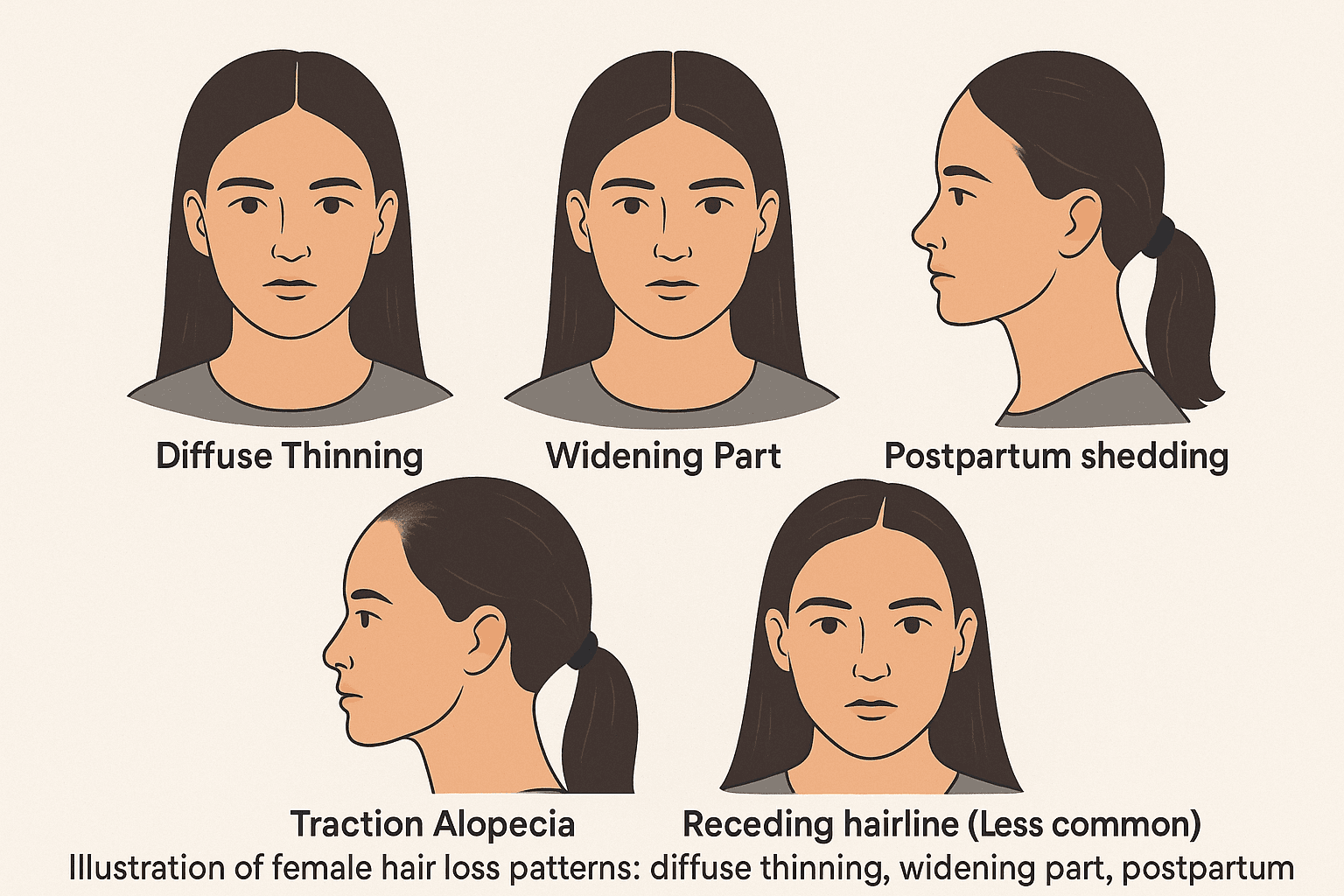
Diffuse thinning: The most common pattern, where hair thins across the top of the scalp. Nutrient deficiencies, especially iron, can trigger this much more often in women than in men.
-
Widening part: Hair loss often starts along the part line with the line appearing wider over time.
-
Receding hairline (less common): Some women may notice thinning at the temples or hairline, similar to male pattern hair loss.
-
Telogen effluvium: Increased, temporary shedding that usually begins 2–3 months after a trigger such as illness, fever, surgery, childbirth, iron or thyroid shifts, or medication changes. It is typically reversible once the trigger is addressed.
-
Postpartum hair loss: A common form of telogen effluvium that occurs after pregnancy and often resolves on its own within several months.
-
Traction alopecia: Caused by chronic tension from tight ponytails, braids, or extensions, usually leading to thinning at the hairline and temples. Early changes are reversible, but long-term tension can cause scarring and permanent loss.
-
Combination: Many women experience a mix of these patterns, sometimes worsened by stress, hormones, or nutritional issues.
Hair Loss Patterns Seen Across Genders
While male and female pattern hair loss (androgenetic alopecia) account for about 95% of all cases, there are other important types of alopecia to recognize:
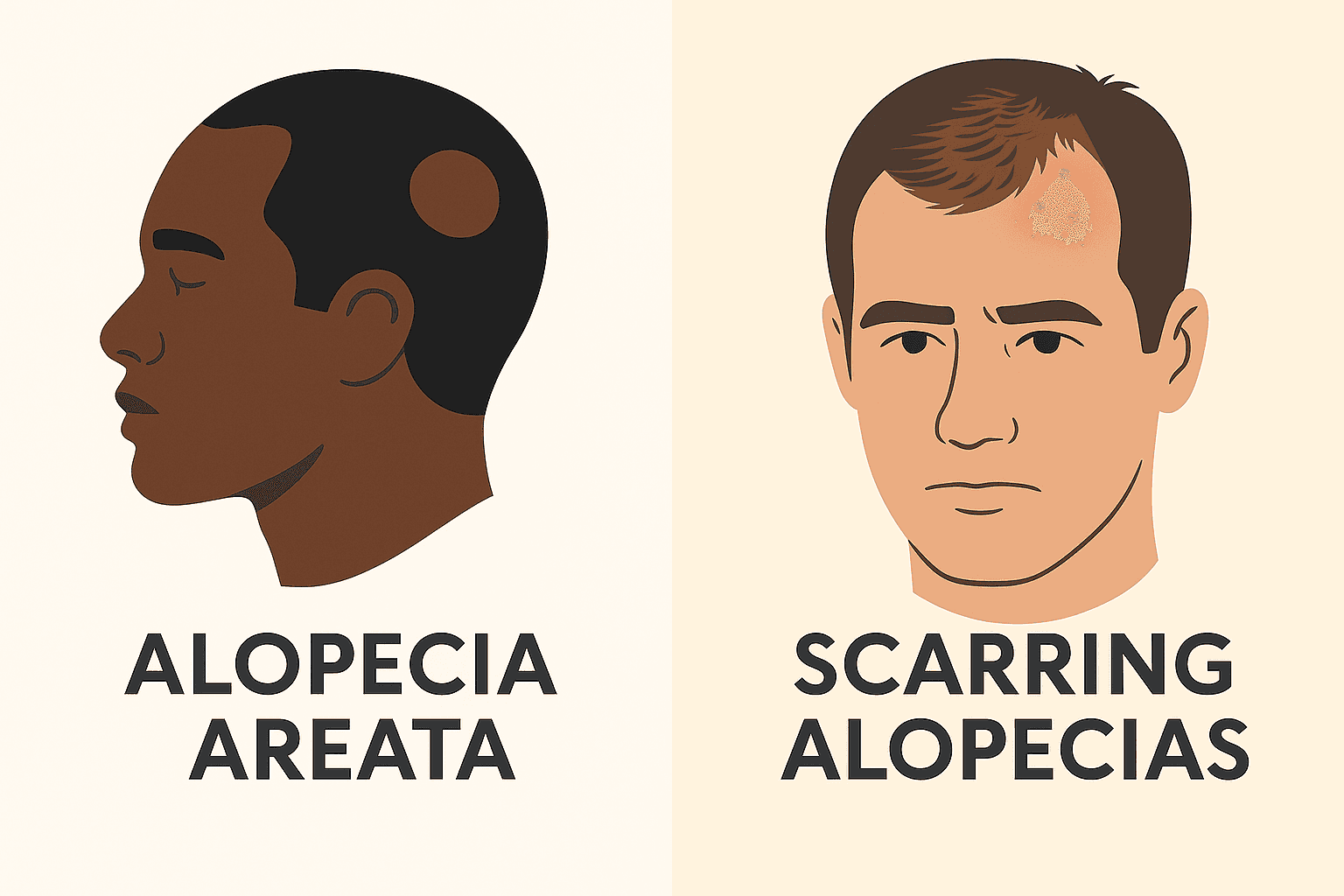
- Alopecia areata: An autoimmune condition where the immune system attacks hair follicles. It causes smooth, sharply defined patches of hair loss on the scalp, eyebrows, eyelashes, and sometimes the beard area in men. Hair often regrows on its own, but but loss may relapse continuously.
- Scarring alopecias: Less common but very serious, these include frontal fibrosing alopecia (FFA), central centrifugal cicatricial alopecia (CCCA), and lichen planopilaris (LPP). Each of the scarring alopecias involve inflammation that leads to fibrosis (scarring), which permanently destroys follicles. Because this loss can’t be reversed, early diagnosis and treatment are critical.
Quick Self-Checks for Hair Loss (At Home)
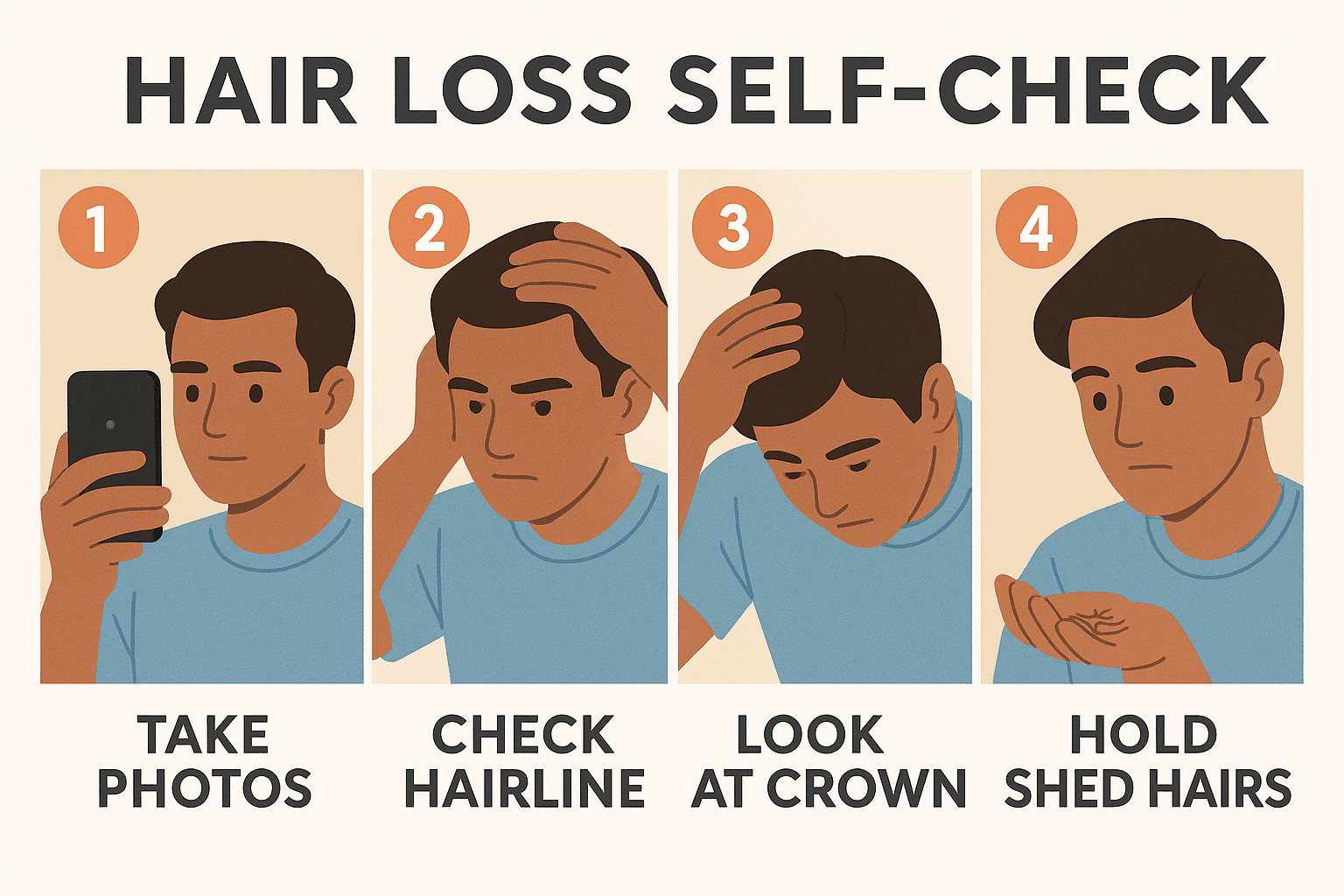
If you’re worried about hair loss, there are a few simple ways to track changes yourself before seeing a specialist:
-
Take consistent photos: Use your iPhone (or any good camera) to snap photos every 1–3 months. Always use the same room, lighting, and angles (front hairline, crown, sides, and back). Pull your hair back with your hand for a clear view of the hairline and temples. Comparing these over time is the most reliable at-home way to detect progression.
We also offer free Anagen trichoscans to take the hassle out of photos for you.
-
Check your hairline: If your temples are creeping back in an “M-shape,” that suggests classic male-pattern involvement.
-
Look at your crown or part line: A circular spot at the crown or a widening part line points toward androgenetic alopecia (male or female pattern).
-
Watch for diffuse thinning: See-through hair at the mid-scalp or across the top is a sign of diffuse thinning. Thinning across the entire scalp, including the sides and back, may suggest or diffuse unpatterned alopecia.
-
Note shedding volume: Losing handfuls of hair two to three months after a major stressor (illness, surgery, childbirth, thyroid or iron issues, medication changes) often fits telogen effluvium, more common in women than men.
-
Check the nape/ears: A band of thinning at the nape or just above the ears may point to retrograde alopecia.
-
Look for unusual patches: Smooth, round bald patches (especially with eyebrow, lash, or beard loss) can signal alopecia areata.
-
Watch for scalp changes: Redness, itching, burning, scale, or shiny skin with missing follicle openings may indicate scarring alopecia and should be evaluated by a dermatologist quickly.
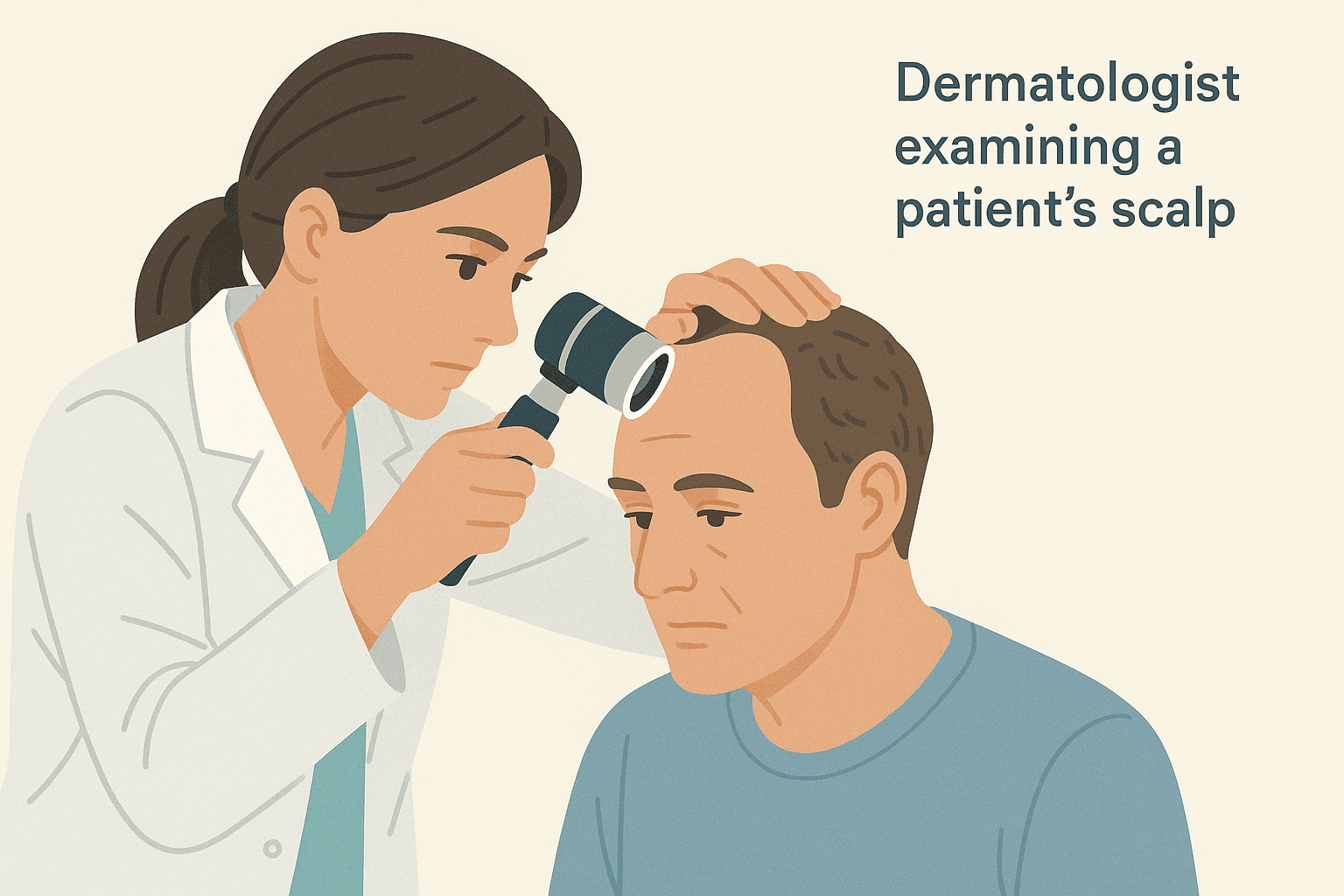
It’s time to seek professional care if:
- Hair loss is rapid, patchy, or unusual.
- Your scalp feels itchy, painful, red, scaly, or inflamed.
- Eyebrows, eyelashes, or beard are affected.
- You’re considering a hair transplant and need donor area mapping.
- You experience sudden shedding after a major trigger (illness, fever, childbirth, surgery, medication, thyroid or iron changes).
A licensed Anagen medical professional can confirm the diagnosis, rule out treatable causes, and help you choose the best long-term treatment plan free of charge.
What to do next:
The first step is to track your hair over time. You can do this by taking consistent, well-lit photos of key areas such as the front, temples, crown, and mid-part, or by getting a free Anagen trichoscan to measure hair density and thickness. It’s best to monitor your hair at least every six months, though more frequent measurements can be helpful if you have the time.
If your hair loss seems to be progressing quickly, consider possible recent triggers such as illness, fever, surgery, childbirth, medication changes, thyroid or iron imbalances, or rapid weight changes. Sharing this information with your clinician can help guide an accurate diagnosis and treatment plan.
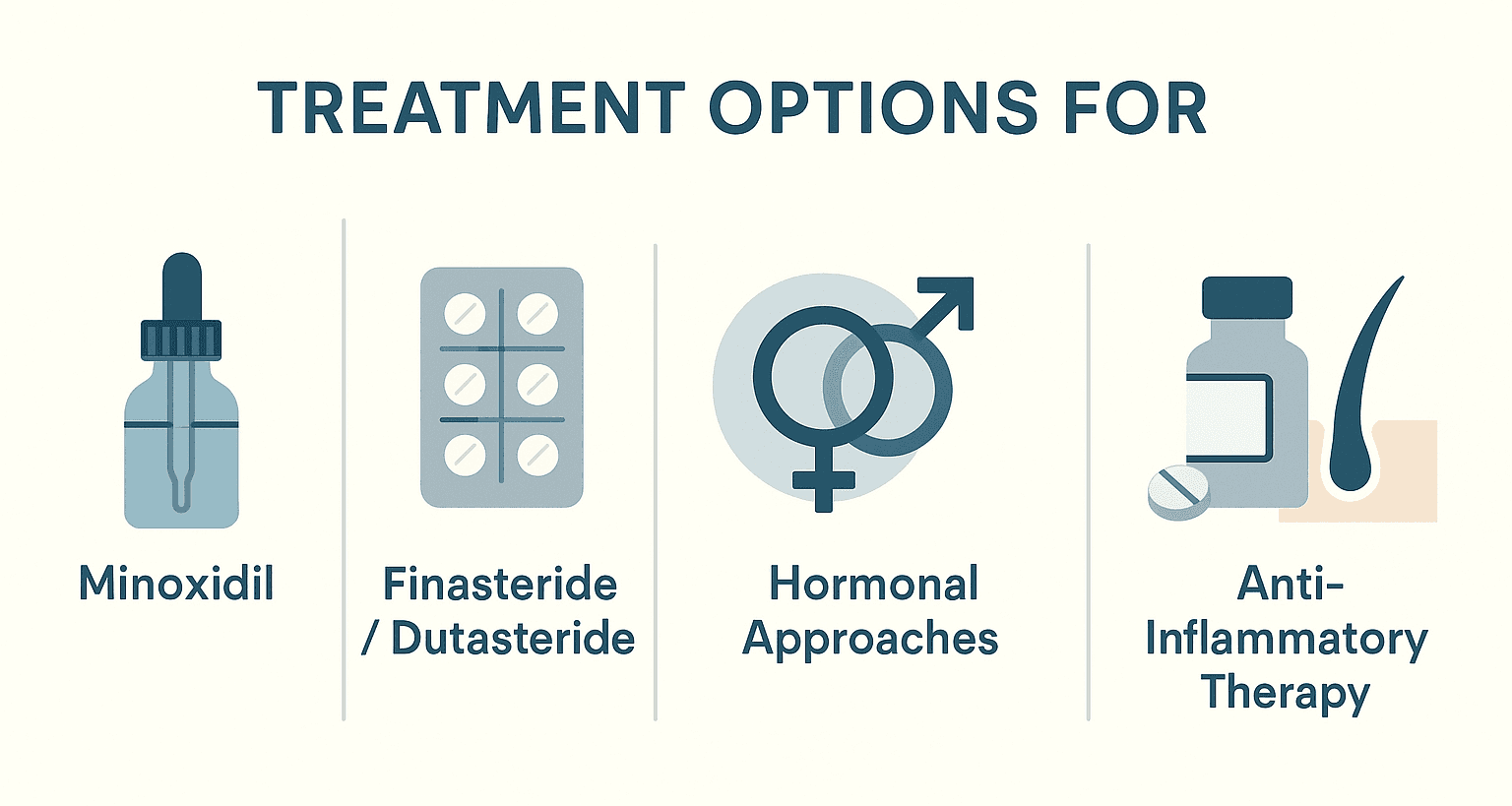
From there, your doctor may recommend evidence-based treatments. Topical or oral minoxidil is effective for both men and women, while finasteride or dutasteride is typically prescribed for most adult men. Anti-inflammatory therapies can be useful in both sexes, and thyroid-based approaches may help when thyroid imbalances are contributing to hair loss. Prostaglandin-based options are also available for men and women, while estrogen-based approaches may be particularly helpful for women experiencing postmenopausal shedding. All of these options are available through Anagen.xyz.

For some patients, hair transplant surgery may be an option, but it should only be considered once donor area stability has been confirmed by a transplant surgeon. It’s also important to understand that transplanted hairs are not immune to future loss. Without ongoing treatment, they may thin or fall out again within two to six years, after their first complete cycle in their new region is complete.
Unfortunately, those with iffuse unpatterned alopecia are unlikely to be candidates.
FAQ: What Type of Hair Loss Do I Have?
What are the most common types of hair loss in men?
Men most often experience receding hairlines, crown thinning or diffuse thinning across the scalp. Many men also experience a combination of these patterns over time.
How does hair loss usually present in women?
Women frequently notice diffuse thinning across the top of the scalp or a widening part line. Other patterns include postpartum shedding, telogen effluvium after stress or illness, traction alopecia from tight hairstyles, and less commonly, temple or hairline recession.
What types of hair loss affect both men and women?
Androgenetic alopecia (male/female pattern hair loss) accounts for about 95% of cases. Other shared conditions include alopecia areata (autoimmune patchy loss) and scarring alopecias such as FFA, CCCA, or LPP, which require early medical intervention.
How can I check at home if my hair loss is getting worse?
Take consistent photos every 1–3 months in good lighting, check your hairline and part line, watch for crown thinning or diffuse see-through hair, and note if shedding increases after stress or illness.
When should I see a doctor about hair loss?
If you think you may need prescription medications to reverse your hair loss, seek professional care. If hair loss is rapid, patchy, accompanied by scalp pain, redness, or scaling, affects eyebrows/lashes/beard, or follows a major trigger like illness, surgery, or childbirth.
What treatments are available?
Evidence-based treatments include topical or oral minoxidil, finasteride or dutasteride for men, hormone-based options for women, anti-inflammatory therapies, innovative combination treatments, and in some cases, hair transplant surgery. Early diagnosis and ongoing treatment are key.