What Is a Trichologist? (vs Dermatologist)
Learn what trichologists do, how they differ from dermatologists, who to see first, and what to expect in a visit—plus tips, red flags, and next steps.
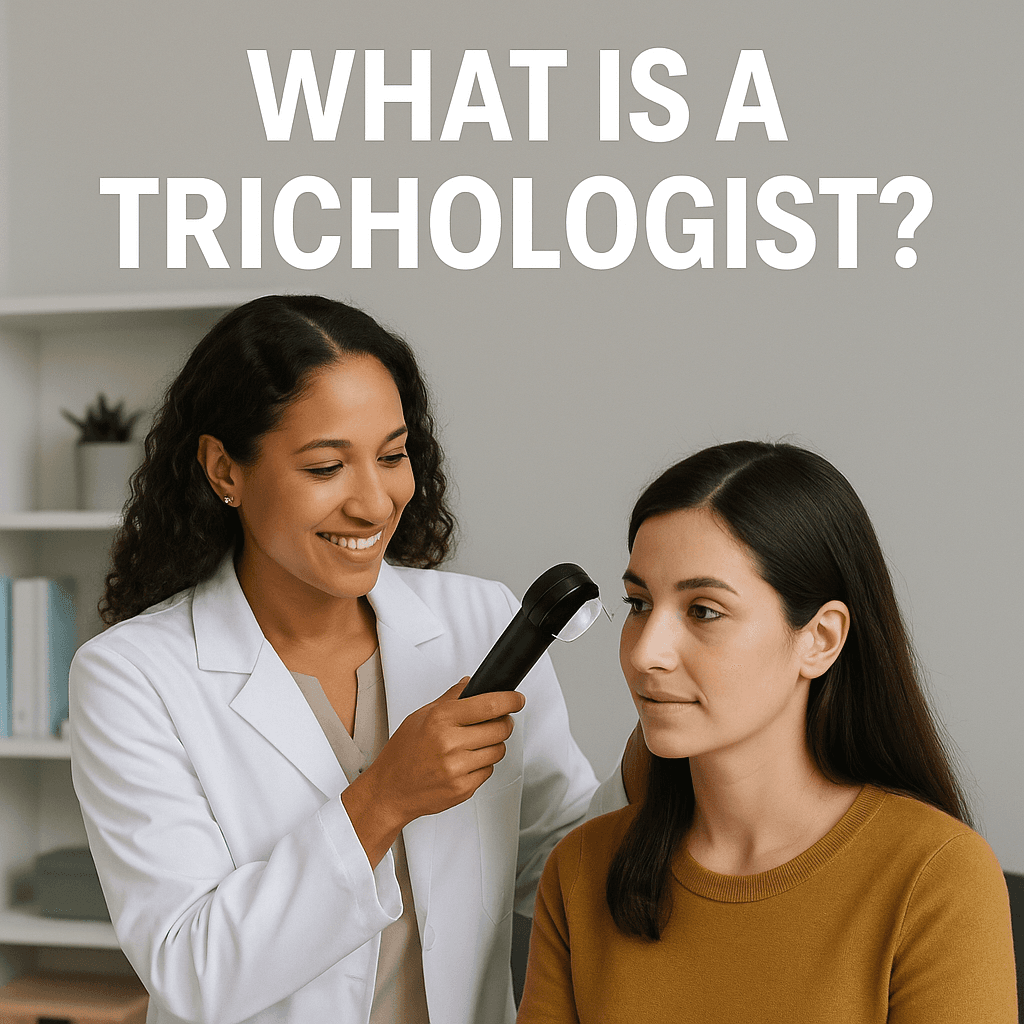
Learn what trichologists do, how they differ from dermatologists, who to see first, and what to expect in a visit—plus tips, red flags, and next steps.
If you’ve been googling about shedding, thinning, or an itchy scalp, you’ve likely come across the term trichologist. The question remains: what exactly does a trichologist do, and how are they different from a dermatologist? Here’s a straightforward guide to help you understand the role of trichologists, when to see one, and what to expect.
A trichologist is an accredited professional who specializes in hair and scalp health. They can evaluate hair loss patterns, scalp conditions, and hair-care practices, guide you with evidence-based routines; and recommend products or lifestyle changes that may support healthier hair.
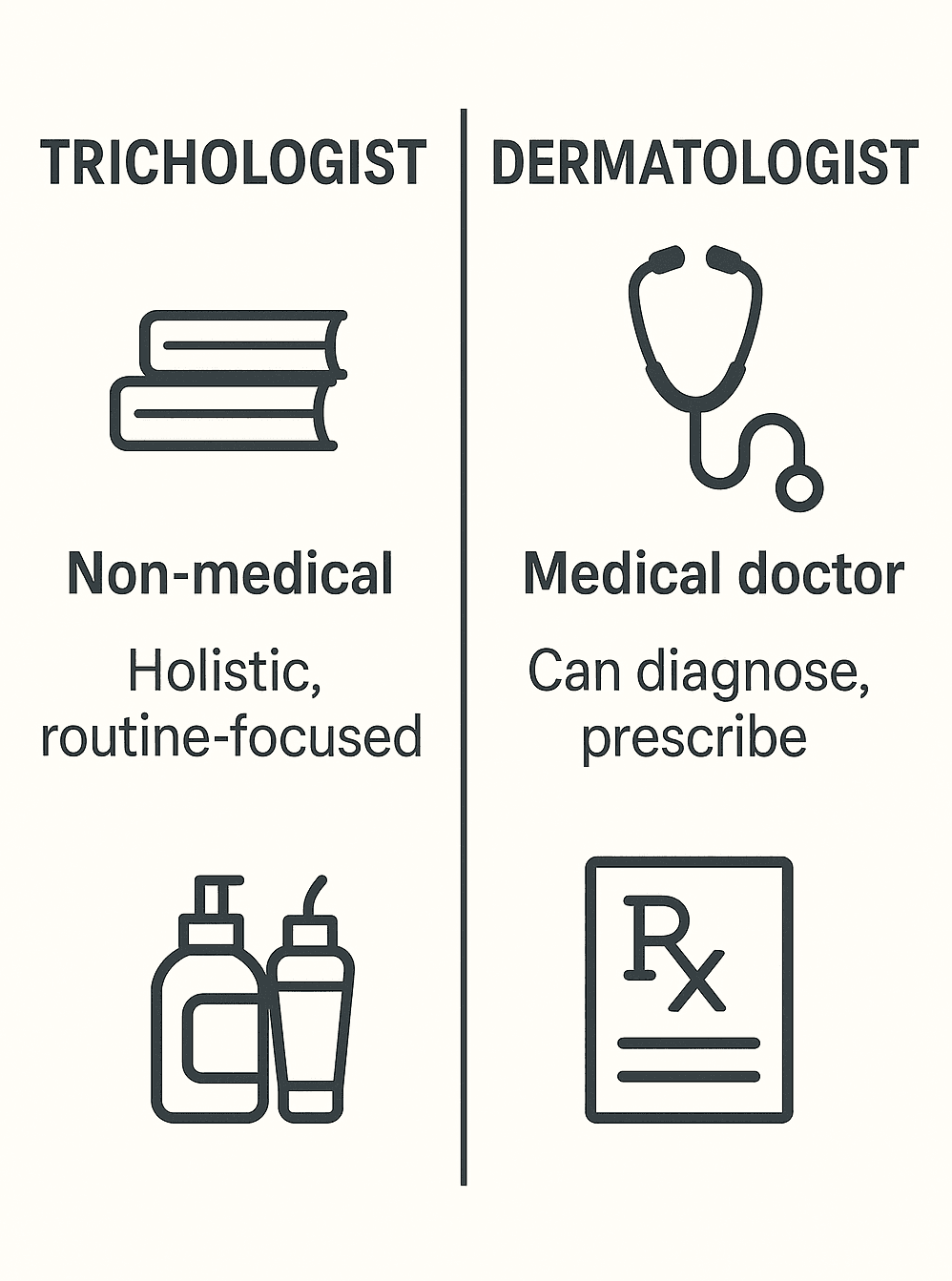
Trichologists are not medical doctors. They do not diagnose medical diseases, prescribe medications, or perform medical procedures. Instead, their role is to educate, support, and help you manage everyday hair and scalp concerns through planning and general advice.
Training & Scope?
Trichologist: Non-medical training programs. Focus on hair loss patterns, scalp hygiene, cosmetic conditions, product science, and coaching. They cannot prescribe, perform medical treatments, or order labs/biopsies.
Dermatologist: Medical doctor with residency training. Dermatologists can diagnose and treat hair loss, medical scalp diseases, order labs, perform scalp biopsies, and prescribe medications like Finasteride, Minoxidil, Spironolactone, Liothyronine, Ketoconazole and more.
When Each Is Most Helpful
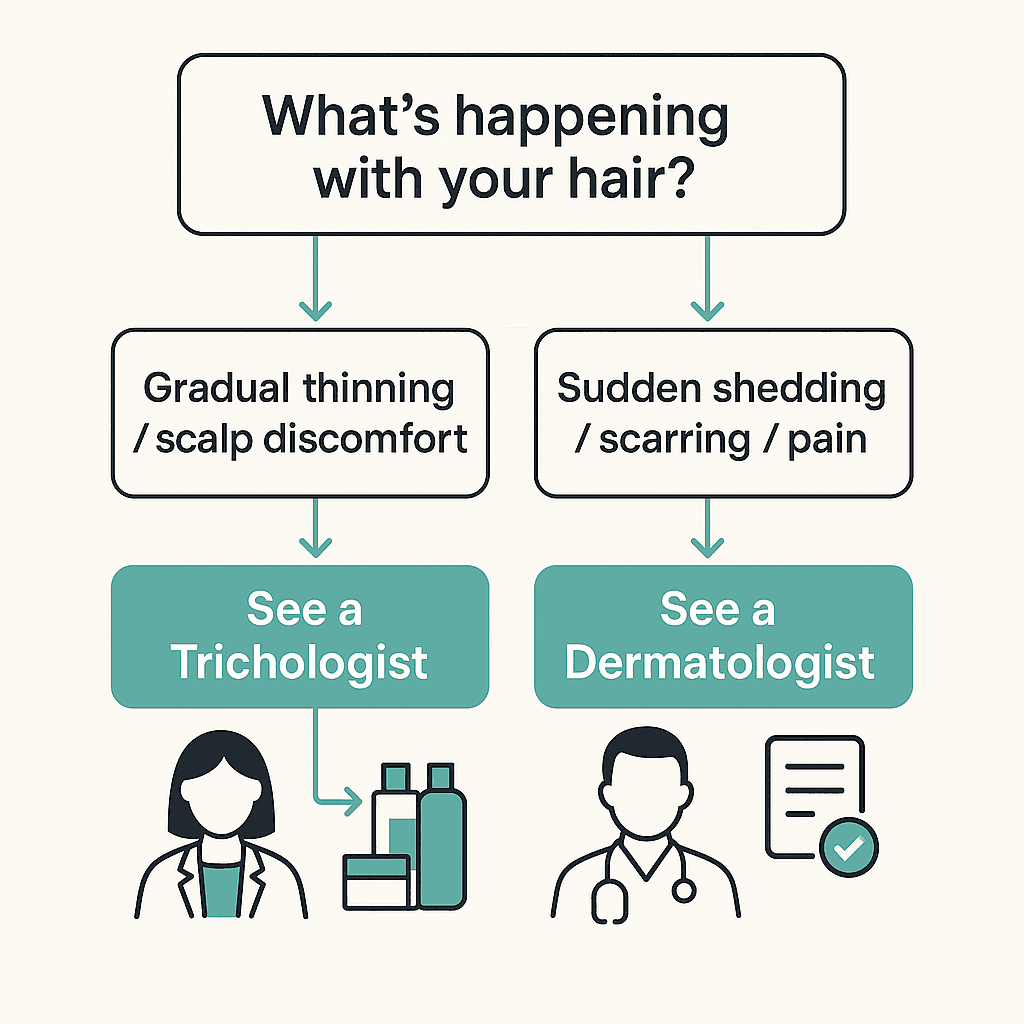
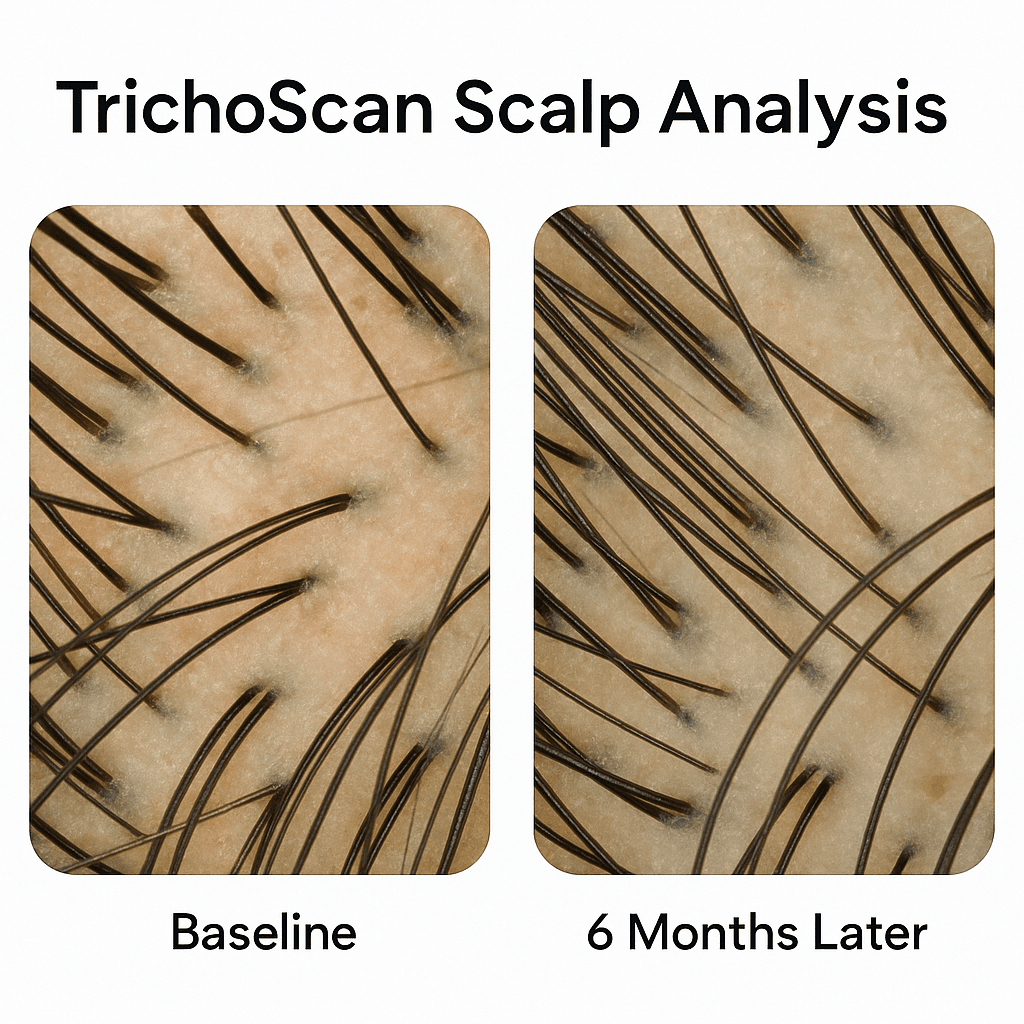
See a trichologist when you want guidance on hair-care routines, product selection, styling practices that protect fragile hair, and objective tracking of your hair over time. Trichologists can help you take consistent photos and even measure hair follicle density (hairs per cm²) and hair shaft diameter. This type of tracking lets you see whether your treatments are truly slowing loss or promoting regrowth, giving you clear data on your progress.
See a dermatologist if you’re experiencing sudden or severe shedding, scarring alopecias, painful or inflamed scalp, postpartum hair loss, hair loss after illness, or if you may need prescription treatments. Dermatologists are medical doctors, so they can prescribe medications, run lab tests and diagnose underlying medical conditions when appropriate.
At Anagen, we connect you with both trichologists and licensed medical professionals across the United States. Trichologists can help you monitor and optimize your hair health, while our medical network ensures you can access prescription therapies when needed. We also offer free virtual appointments with licensed providers. The best results often come from using your free TrichoScan with an Anagen team member and an accompanied online free Anagen dermatologist visit.
Every trichology practice is a little different, but most thorough visits cover four main areas:
Your trichologist will start by taking a detailed history. This often includes when your shedding or thinning began, family history of hair loss, styling or chemical treatments, extensions or tight hairstyles, stress levels, medications or supplements, and nutrition patterns. They’ll also ask about your personal goals, whether that’s increasing density, reducing breakage, improving scalp comfort, or exploring camouflage strategies.
Next comes a hands-on and visual exam of your scalp and hair. This includes checking for redness, flaking, tenderness, or blocked follicles, as well as assessing your hair shafts for breakage, weathering, or chemical/heat damage. Many trichologists also use digital tools like TrichoScan imaging or trichoscopy. These measure hair density (hairs per cm²), follicle shaft diameter (miniaturization), and growth rates to create an objective baseline that can be tracked over time with repeat scans and photos.
If you want to get the most from your appointment make sure that your trichologist has a TrichoScan before you visit. Alternatively, Anagen offers free Trichoscans with our team members, either at our laboratory or a remote location of your choice.
Based on the assessment, your trichologist will create a personalized plan. This may include adjustments to your shampoo (skip the hassle and order FolliCool EveryDay Shampoo if you don't want to visit a trichologist) along with protective styling, detangling, and heat-tool guidance. They’ll often recommend specific products, although they cannot prescribe medical treatments. Most trichologists also set up a monitoring schedule — such as photos or TrichoScan follow-ups every 1–3 months — so you can see measurable changes over time. If your hair loss increases, they may refer you to a dermatologist for prescription therapy or further testing.
Finally, a big part of the visit is education. Your trichologist will explain how the hair growth cycle works (growth, rest, shedding), how seasonal or lifestyle factors may influence shedding, and what kind of timeline you can realistically expect. They’ll emphasize that meaningful changes are usually measured over months, not weeks. You can also find these resources here on Anagen Hair Loss 101 .
Trichologists Can:
Trichologists Can’t (and shouldn’t):
Red flags to watch for
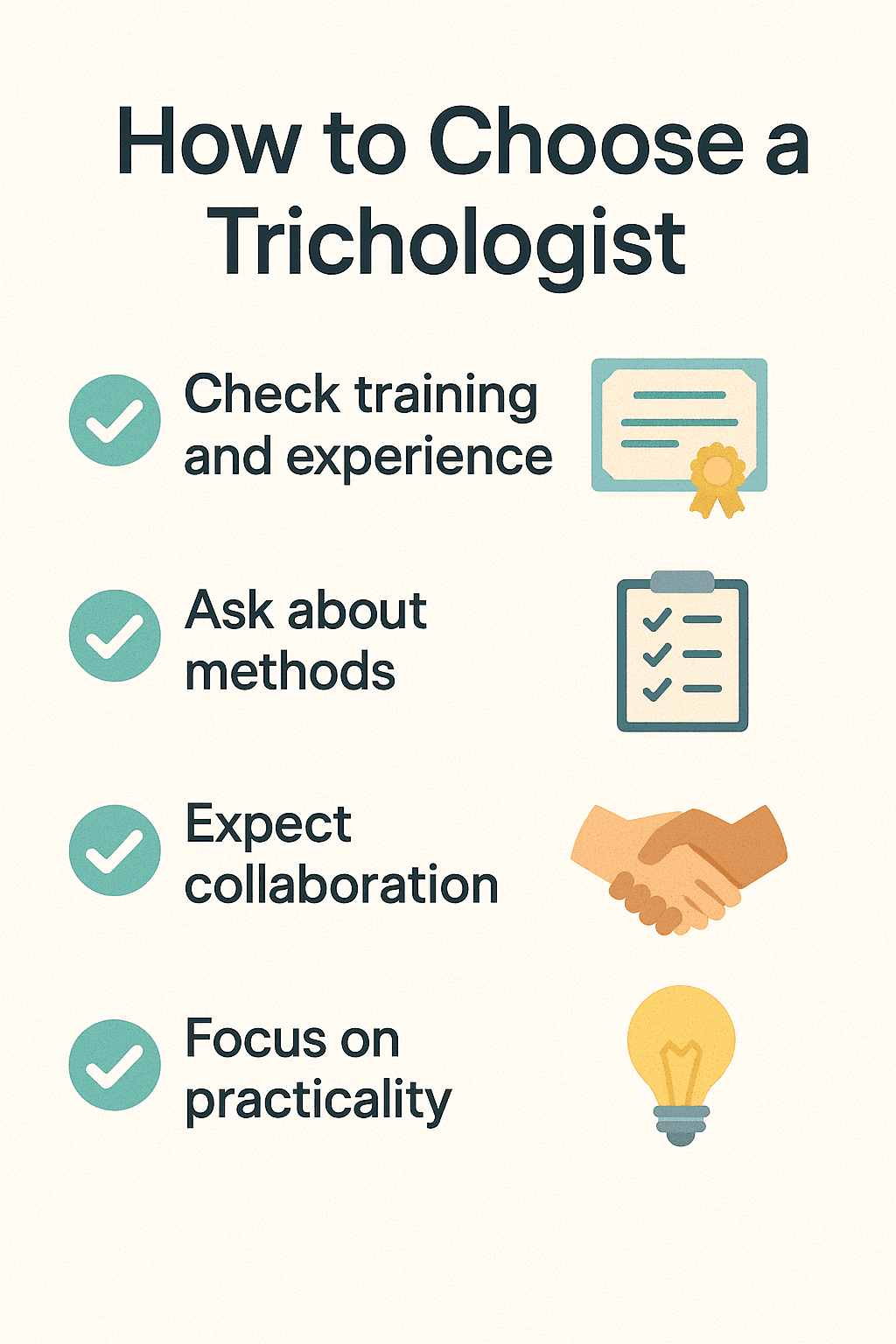
Check training and experience. Look for transparent education history and ongoing learning in hair science. The best referrals are word of mouth from trusted friends.
Ask about methods. Do they use standardized TrichoScans, photos, simple counts, or part-width tracking? How will progress be measured?
Expect collaboration. A good trichologist is happy to partner with your dermatologist, primary-care clinician, or stylist.
Focus on practicality. Recommendations should fit your lifestyle and hair type - and be grounded in basic biology and realistic timelines.
For many people, the most efficient path is dual-track care:
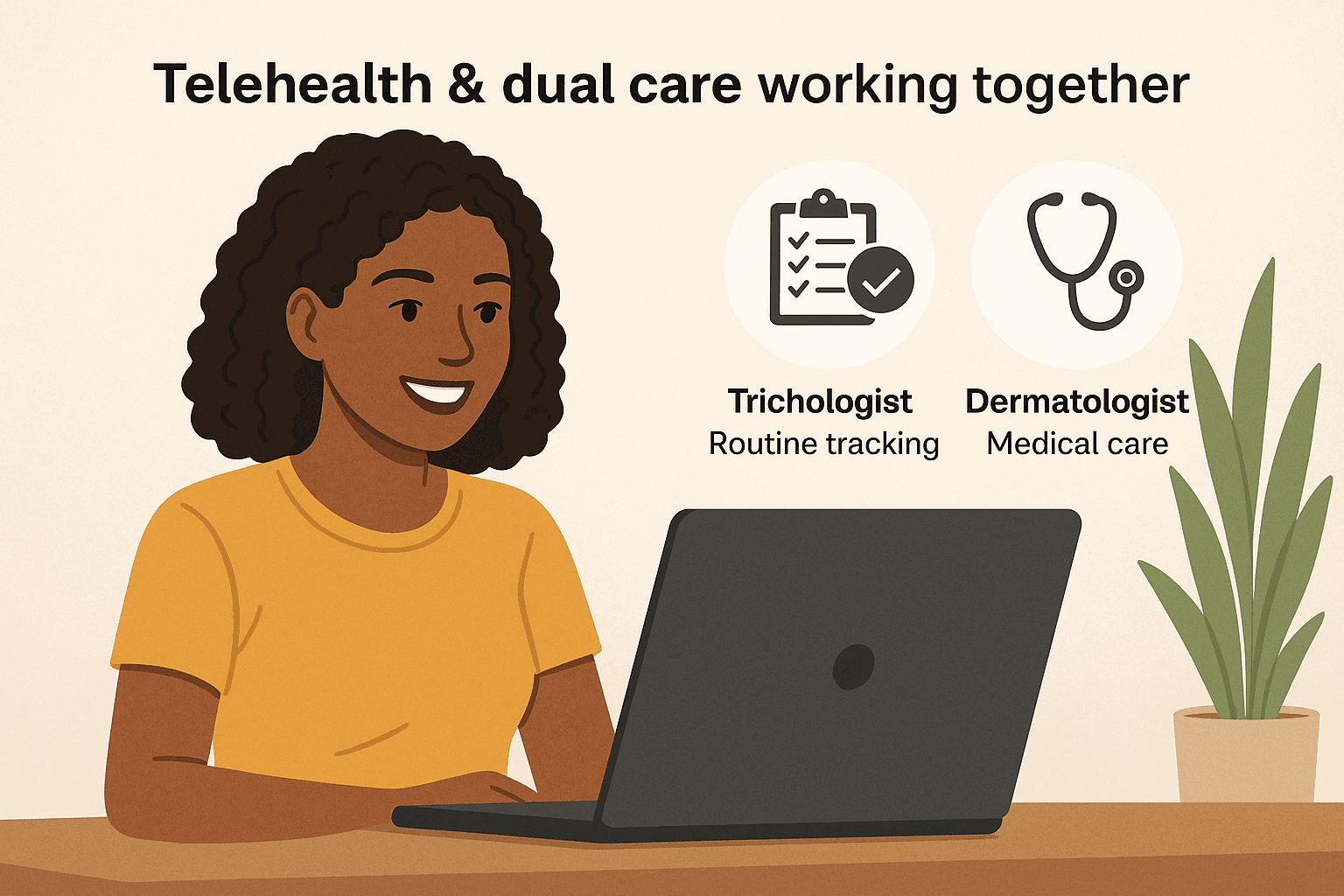
That pairing gives you practical, weekly wins while ensuring you won’t miss medical conditions that need treatment. At Anagen, we offer free access to both TrichoScans and licensed Medical Professionals, under our founding belief that everyone deserves a full head of hair.

A trichologist is a hair and scalp care specialist - your guide to routine, OTC products, and protective styling - who works alongside medical professionals when needed. If your hair goals include less breakage, calmer scalp, and smarter routines, a trichologist can be a great first step. If you need a prescription for you pattern hair loss, feel pain or notice inflammation, experience sudden or patchy loss, or have any scarring concerns, add a free Anagen telehealth visit to your plan promptly.
Will a trichologist help if I’ve “tried everything”? Often, no. A trichologist can fine-tune routine and styling (wash cadence, conditioner placement, heat settings, detangling) to cut breakage and improve coverage, but they can’t diagnose medical causes or prescribe treatments.
How soon will I see results? Cosmetic improvements (less breakage, better shine/volume) may show in weeks. Density changes typically take 3–6+ months, depending on cause and treatment.
Do I need both a trichologist and a dermatologist? Not always. For routine or styling guidance, a trichologist may be enough. Add dermatology for pain/inflammation, rapid or patchy loss, scarring risk. If you’re considering prescription options add an Anagen doctor.
Can a trichologist prescribe medications? No. Trichologists are not medical doctors and cannot prescribe. They can coordinate or refer you to licensed clinicians who can.
What should I bring to my first visit? A list of products, supplements/meds, recent photos, and notes on styling, diet, stress, and family history.