Seasonality Effects on Hair Growth
Hair shedding often peaks late summer into fall. Learn why seasonality matters, what’s normal, and how to judge treatments over 6–12 months.
Hair shedding often peaks late summer into fall. Learn why seasonality matters, what’s normal, and how to judge treatments over 6–12 months.
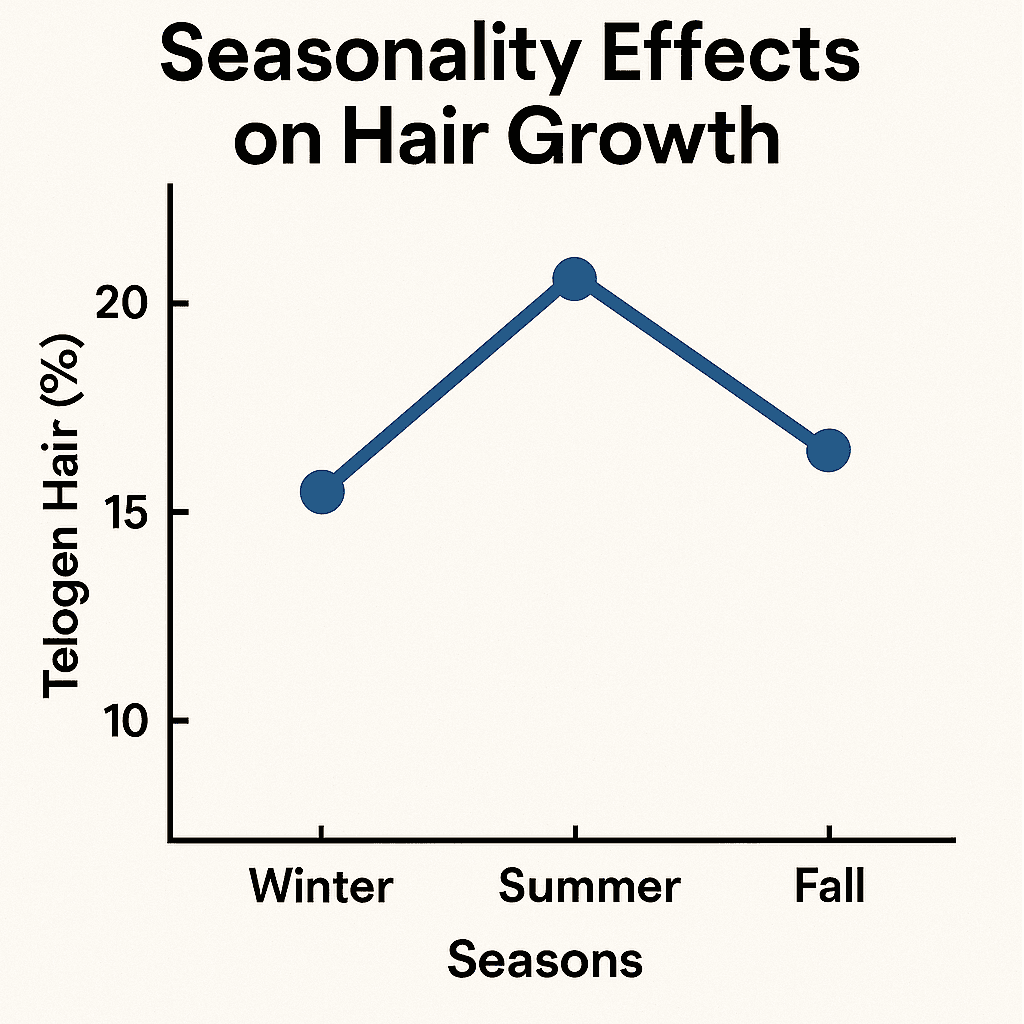
Hair growth and shedding aren’t flat lines. Large datasets show a higher telogen (resting) percentage in summer with noticeable shedding that often peaks late summer into fall, then rebounds toward winter, so small “wins” or “losses” around these months may be seasonal noise rather than a treatment effect (a common pitfall in single-arm trials).
Healthy women, trichogram study (n = 823). Telogen percentage peaked in summer (sometimes with a smaller spring bump) and was lowest in late winter, a clear annual rhythm in scalp hair cycling. Translation: you’re more likely to notice shedding summer into early fall.
Men, longitudinal sampling (n = 14). Classical study by the University of Bradford tracking beard/scalp hair found male shed counts doubling in the summer vs winter. Basically, beard and scalp growth rates also varied seasonally.
Population signals. Time-series analyses (e.g., Google Trends) find seasonal waves in “hair loss” searches, cresting late summer/fall which are consistent with clinic observations. These aren’t diagnostic, but they echo the biology.
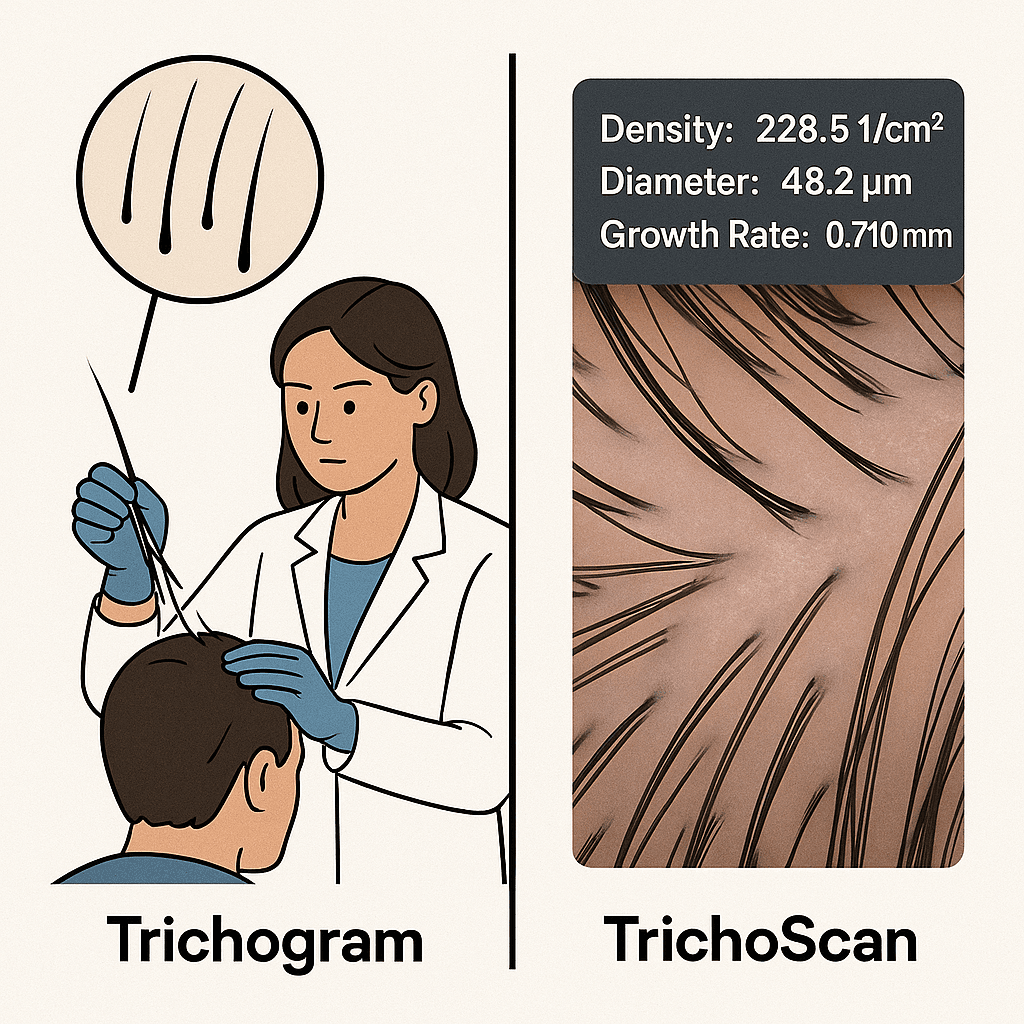
Definitions:
A trichogram is a traditional diagnostic technique in which a clinician plucks a small number of hairs, usually between 50 and 100, from the scalp and examines the roots under a microscope. This helps determine the proportion of hairs in different growth phases, such as anagen (growing) and telogen (resting).
A TrichoScan, by contrast, is a modern, non-invasive digital method. Instead of removing hairs, a small scalp area is imaged directly, often by simply parting the hair and taking a close-up photograph or dermoscopic scan. Specialized software then analyzes the images to calculate hair density, shaft diameter, and growth rate, allowing clinicians to track subtle changes over time.
Human follicles are influenced by photoperiod (aka “daylength” in layman’s terms) and downstream hormonal and immune system changes in pathways. Your skin and hair follicles create their own hormones and immune responses separate from the rest of your body. Animal and ex vivo work point to anagen/telogen cycle timing shifts under different light cycles (e.g., VEGF pathway changes under short photoperiod), suggesting light-linked cues that likely interact with temperature, UV, and lifestyle. It’s never smart to over-extrapolate animal data in human biology, but it may help explain the pattern and lead to further investigation.
Don’t panic from August - October: A brief bump in shed counts can be seasonal; look for stabilization by early winter.
Measure, don’t guess: Take consistent monthly photos with the same angle and lighting. If possible, take a trichoscan to track density/diameter objectively. You can get a free TrichoScan at anagen.xyz
Judge treatments over 6–12 months, not 6 weeks: Especially if your start date overlaps seasonal peaks (I.e. starting treatment in Summer)
Still escalate if red flags show up: widening bald patches, scarring symptoms, shedding lasting for more than 3 months, or systemic side effects are all reasons to consult a medical professional.
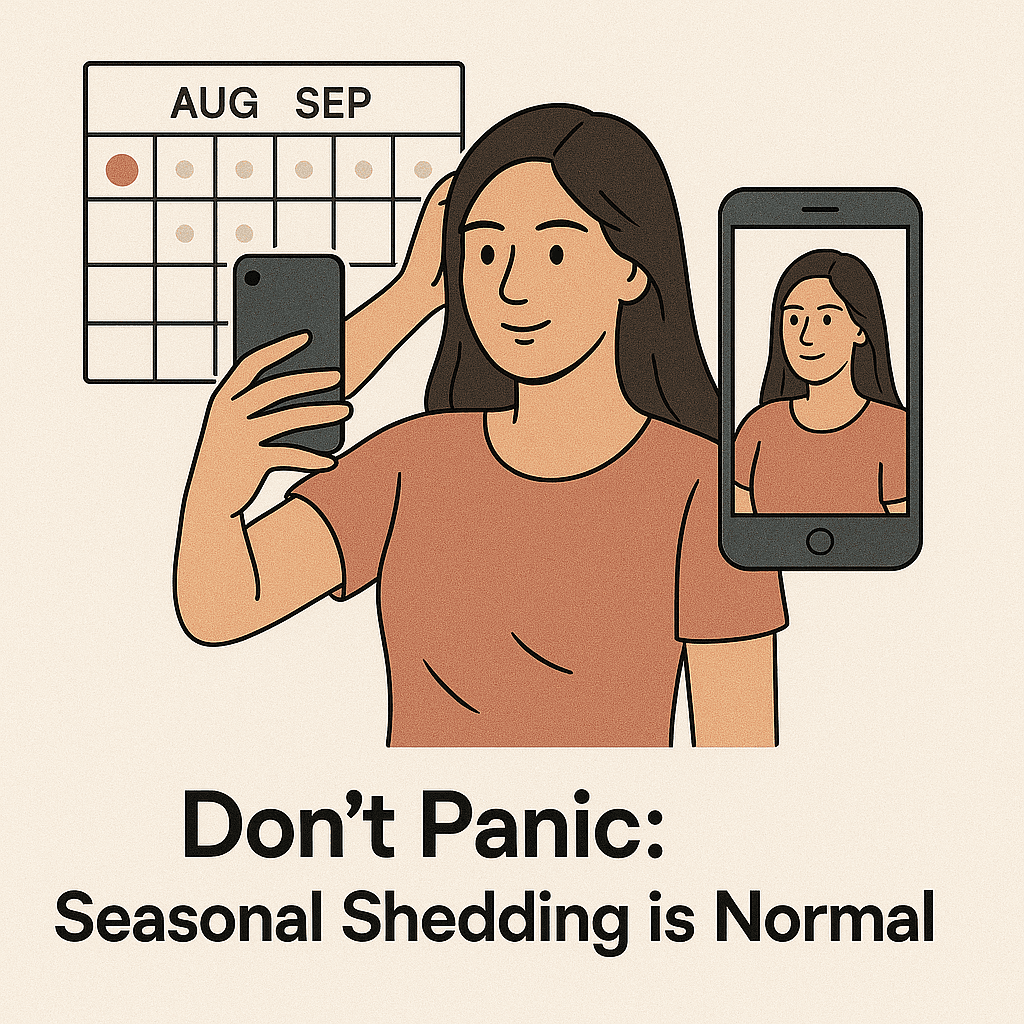
Seasonality is real enough to confuse patients and distort trials. Expect more shedding late summer into fall, with a rebound toward winter. Anchor decisions to longer windows and objective measurements - and treat any treatment regrowth claims during these months with healthy skepticism.
Is seasonal hair shedding normal? Yes. Many people shed more from late summer into early fall, with stabilization toward winter. This reflects normal seasonal shifts in the hair cycle.
When are the seasonal peaks and lows? Peak shedding: Hair shedding tends to rise in the summer, with a slight increase often seen in the spring. The most visible shedding usually happens in late summer to early fall. Lowest shedding: The fewest hairs are shed in late winter.
Does seasonal shedding differ by hemisphere? Yes. Because daylength patterns are reversed, seasonal shedding occurs about six months apart between hemispheres.
How long should I judge a hair loss treatment? Hair loss treatments should be evaluated over 6 to 12 months, using consistent photos or objective tools like trichoscopy or phototrichogram. Because hair cycles are slow, shorter timeframes can be misleading. If you begin treatment during peak-shedding months (late summer to early fall), it may take even longer to see a fair result, so patience is key.
How big is the seasonal effect? For most people it’s modest (a few percent change in shedding), but because most hair loss treatments don’t regrow huge amounts of hair, even small seasonal swings can distort before/after study results.
Is this just about UV or sun exposure? No. The main driver is daylength (photoperiod), which influences hair cycles. UV, temperature, and lifestyle factors like stress, travel, and hair care can also contribute.
What are red flags that it’s not just seasonal? If shedding lasts longer than 3 months, if you notice widening patches or scarring, or if you have health issues (thyroid, iron deficiency, illness, or medication side effects), it’s time to see a clinician.
How can I track hair changes objectively? Take monthly photos from the same angle and in the same lighting. An iPhone or other smartphone camera works fine if you don’t have access to more advanced tools. For added precision, dermatologists can use trichoscopy or phototrichograms (e.g., TrichoScan) to measure density and hair shaft diameter.