Intro
If you’ve just had a baby and your ponytail suddenly feels thinner, you spot hundreds of hairs in your shower drain, or wispy “baby hairs” are popping up along your hairline, you are not imagining it. Postpartum shedding is a hormone-driven reset that often starts 2 to 4 months after delivery and peaks around 3 to 4 months. The good news is that it is usually temporary, and there are practical steps to reduce shedding, support regrowth, and recognize when something else (like female pattern hair loss) is also in the mix.
TL;DR (for sleep-deprived moms)
- What is Postpartum Hair Loss: A temporary telogen effluvium (shock hair loss) that peaks ~3–4 months after delivery and eases by 6–12 months.
- First steps: Prioritize sleep, nutrition, iron/ferritin, thyroid screening; keep scalp care gentle (try FolliCool EveryDay Shampoo).
- While breastfeeding: Avoid meds; generally defer topical actives (minoxidil, prostaglandin analogs, hormones, T3) until finished breastfeeding.
- PPD matters: Treating postpartum depression improves sleep, nutrition, and stress – all hair-positive.
- When it lingers: If shedding hasn’t improved by 12 months or you see a widening part/see-through crown, evaluate for FPHL.
What’s Actually Happening?
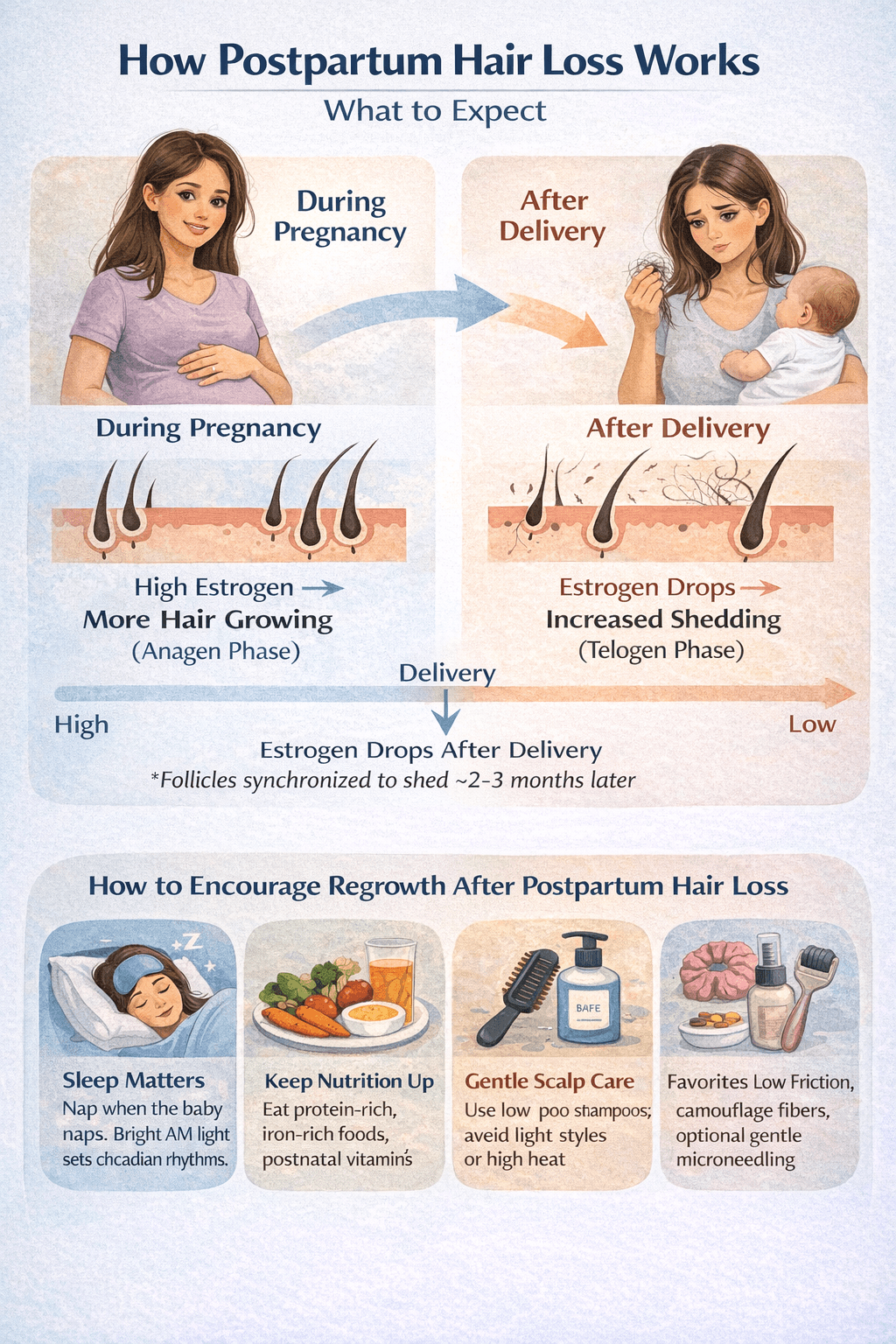
During pregnancy, higher estrogen keeps more hairs in anagen (growth). After delivery, estrogen levels fall, and many follicles shift into telogen (rest) at the same time, leading to a synchronized shed a few months later. This is a cycle reset, not permanent follicle miniaturization or damage.
Typical Timeline After Delivery
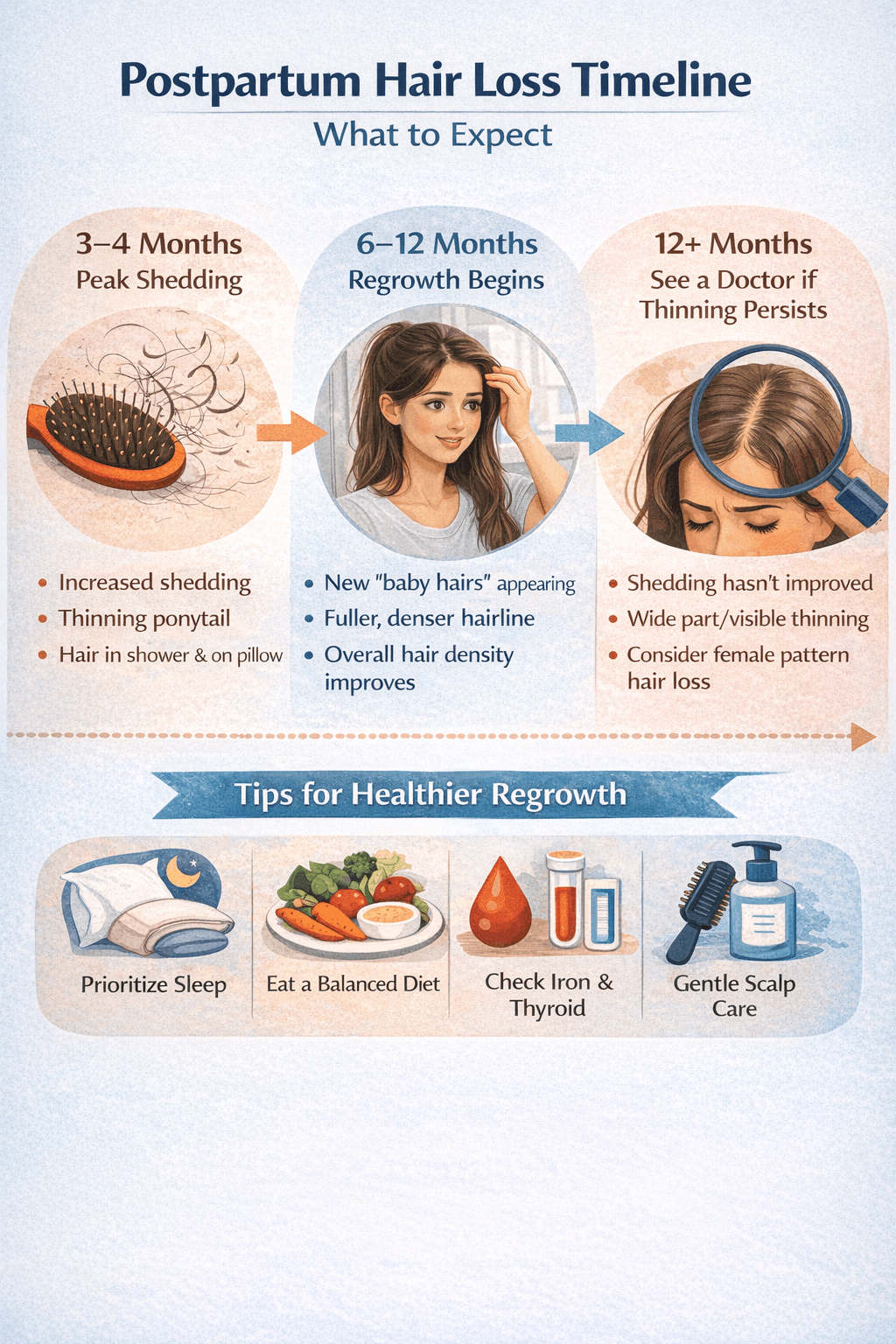
- Weeks 6–12: Shedding begins.
- Months 3–4: Peak shed (“it’s all falling out” feeling).
- Months 6–12: Shedding eases; short new hairs at hairline/temples; density improves.
Check the Basics (so we don’t chase the wrong problem)
- Iron & Ferritin: Pregnancy, delivery, breastfeeding can deplete stores of certain nutrients. Ask for an iron panel; many hair clinicians aim for ferritin ≥50–70 ng/mL.
- Thyroid (TSH ± reflex tests): Screen for postpartum thyroiditis if symptoms or shed are significant.
- Photos/Trichoscopy diary: Track with consistent lighting/angles (use our free Anagen Trichoscopy Diary).
What You Can Do Now (Breastfeeding-Friendly)
What You Can Do Now (Breastfeeding-Friendly)
- Sleep and stress:
Protect sleep as much as possible. Aim for short daylight walks to support stress hormones and recovery.
- Protein and micronutrients:
Prioritize protein-adequate meals, iron-rich foods, and continue a balanced prenatal or postnatal vitamin as recommended by your OB.
- Gentle scalp care:
Wash regularly and avoid tight styles, harsh chemicals, or high heat. A low-friction daily shampoo, such as FolliCool EveryDay Shampoo, is a good default.
- Microneedling (optional):
Gentle, well-sanitized microneedling once weekly to every other week may support regrowth, but only if you have the bandwidth and your clinician agrees.
- Styling strategies:
Opt for volumizing cuts, light root lift, no-pull clips or scrunchies, and camouflage fibers at the part to improve the appearance of density.
What to Hold (for Now)
While breastfeeding (and during pregnancy), take a conservative approach:
- Oral medications: Avoid (e.g., oral minoxidil, spironolactone).
- Topical active ingredients: Generally defer minoxidil, prostaglandin analogs, hormones, topical T3 until breastfeeding is complete (decide with OB/derm if earlier use is considered).
PPD Matters: For You and Your Hair
Postpartum depression can amplify shedding via sleep disruption, appetite changes, and higher stress load. Getting help is health-critical and hair-positive (therapy, support networks, OB-approved options).
Red Flags (See a Dermatologist Promptly)
- Pain, burning, expanding patches at crown/part → possible scarring alopecia.
- Round/oval bald patches → possible alopecia areata.
- Severe dandruff with inflammation/pustules or rapid diffuse loss.
- Thyroid symptoms (palpitations, heat/cold intolerance, tremor, constipation, marked fatigue).
Expectations (So the Calendar Doesn’t Gaslight You)
- Weeks 0–8 on any plan: Reset shed can happen: annoying, normal, temporary.
- Months 3–4: Shed slows; stubble/baby hairs appear.
- Months 6–12: Visible thickening; consistency > perfection.
Sample Postpartum Plans (Bring to Your Derm)
-
Typical postpartum shed, breastfeeding
-
Sleep/nutrition plan; iron/ferritin + TSH
screen • Gentle care (FolliCool EveryDay Shampoo) • Optional gentle microneedling • Defer pharmacologic topicals • Monthly photos; expect improvement over months
-
Postpartum shed + PPD
- Prioritize PPD treatment with family/OB • Same hair basics as A • Add practical sleep shifts • Revisit treatments after breastfeeding or sooner if team agrees.
-
Persistent thinning >12 months or patterned widening part
- Full reassessment (trichoscopy, ferritin, thyroid) • If FPHL, initiate the right Anagen treatment.
When Active Treatment Makes Sense (After Breastfeeding or if Not Breastfeeding)
If shedding persists beyond ~12 months, density keeps dropping, or trichoscopy shows miniaturization, pivot to FPHL care:
- Topical minoxidil foundational.
- Spironolactone (per clinician) for androgen signaling.
- Topical estriol (postmenopause, clinician-guided; avoid with estrogen-sensitive cancer).
- Topical T3 (case-by-case).
- Topical levocetirizine for inflammation.
- Microneedling to enhance minoxidil (avoid applying minoxidil within 24 h post-needling).
- Transplant for stable hairline recession when appropriate.
Bottom Line
- Postpartum shedding is real, common, and temporary. Support sleep, nutrition, iron, and thyroid; protect your scalp; and give the cycle time to reset. If thinning persists or patterns emerge after 12 months, pivot to proven FPHL tools when it’s safe for you. For a tailored plan, email andrew@anagen.xyz with timing (weeks postpartum), breastfeeding status, symptoms, and hair goals.
FAQs (SERP-Optimized)
-
How long does postpartum hair loss last?
- Shedding usually peaks at 3–4 months and eases by 6–12 months as hormones and the hair cycle reset.
-
Is postpartum hair loss perman
ent?
- No—most cases are temporary. If thinning persists beyond ~12 months or patterns appear, assess for female pattern hair loss (FPHL).
-
What can I safely do while breastfeeding?
- Focus on sleep, nutrition, iron/ferritin, thyroid, and gentle scalp care; most clinicians defer medications and topical actives until breastfeeding is complete.
-
When should I see a dermatologist?
-
If you notice b
urning/itching with spread, round bald patches, pustules, or thyroid symptoms, seek prompt evaluation.
-
Will minoxidil speed recovery?
- Minoxidil can help—but many clinicians wait until breastfeeding ends. Decide with your OB/derm.