How to Hide Hair Loss: Best Tips for Men and Women
How to hide hair loss: men’s & women’s hairstyles, fibers and scalp concealers, color & parting hacks, camera-posing tips, and proven treatments.
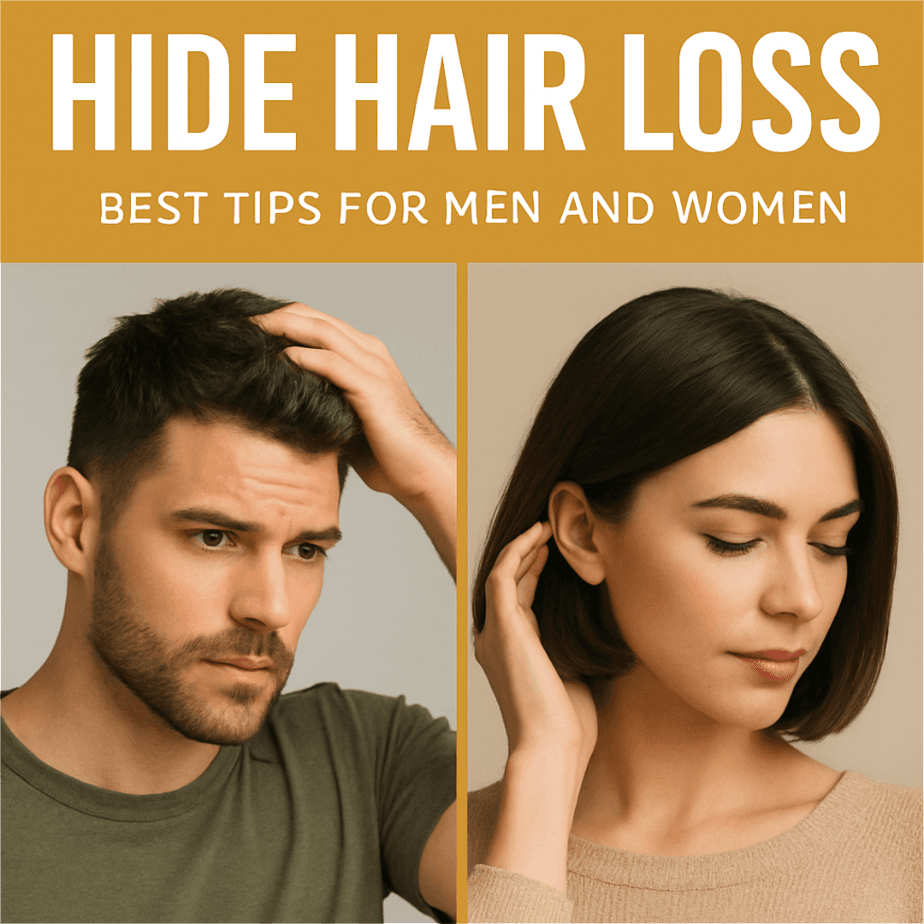
Hair loss might be one of your biggest fears. You might have stared at it in the mirror this morning, using time and mental energy better spent elsewhere. By age 35, about ⅔ of all men experience some form of hair loss, so chances are you’re not alone! Still scary, but you don’t have to let it define your appearance. With the right strategies, you can hide thinning areas, boost your confidence, and even protect your scalp health along the way. Below, we’ve curated a list of some common ways you can help hide the thinning areas while still looking your best.
French Crop / Textured Crop (receding hairline): Short back and sides with a choppy fringe pulled forward to blur thinning temples.
Style tip: Use matte clay and rough-dry; avoid shiny pomades that expose the scalp.
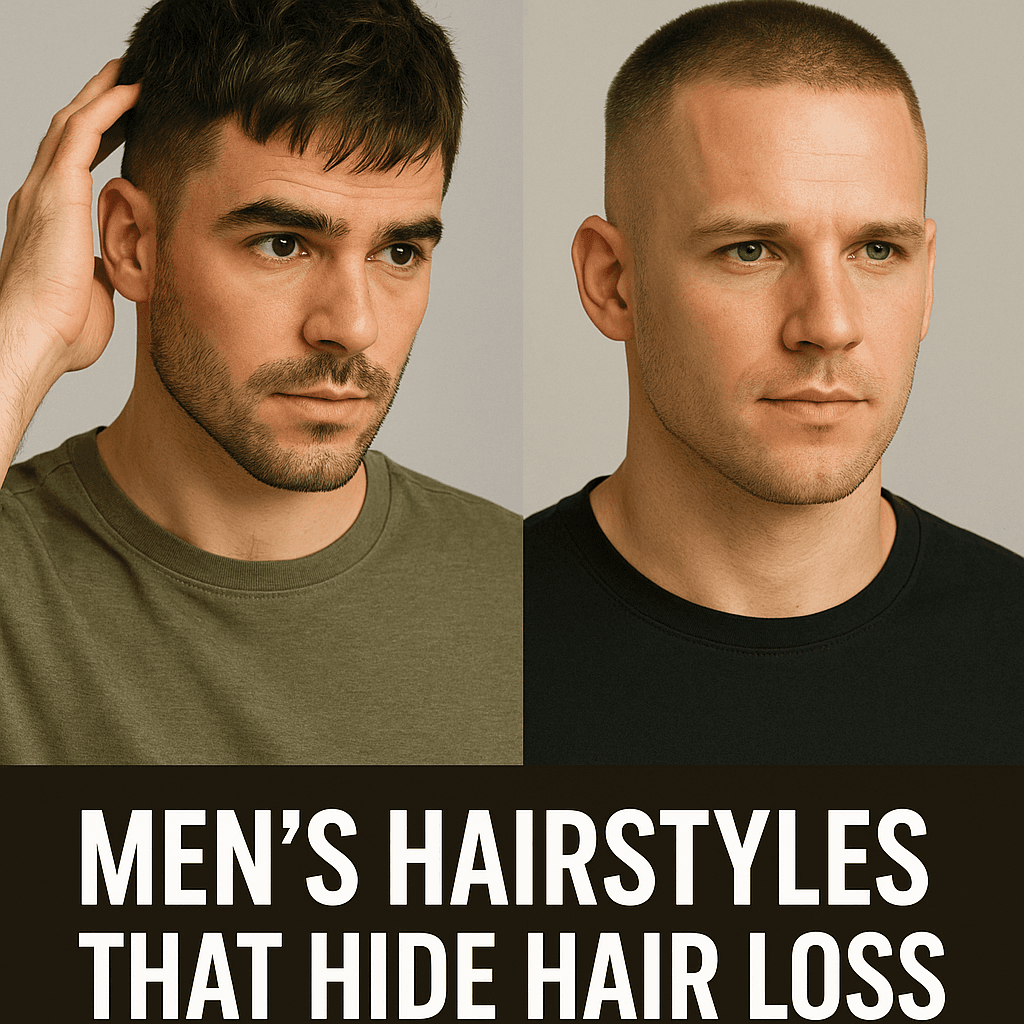
Buzz Cut or High & Tight (general thinning/crown): Keeps hair very short, reducing contrast between scalp and hair for a fuller look. Cutting the sides shorter also makes the hair on top appear thicker.
Style tip: A clean fade from sides to top enhances the illusion of density.
Blunt Bob or Lob (shoulder-length, diffuse thinning): A blunt edge makes ends look thicker, while a lob adds weight without dragging hair down.
Style tip: Use a root-lift mousse and blow-dry with a round brush for volume.
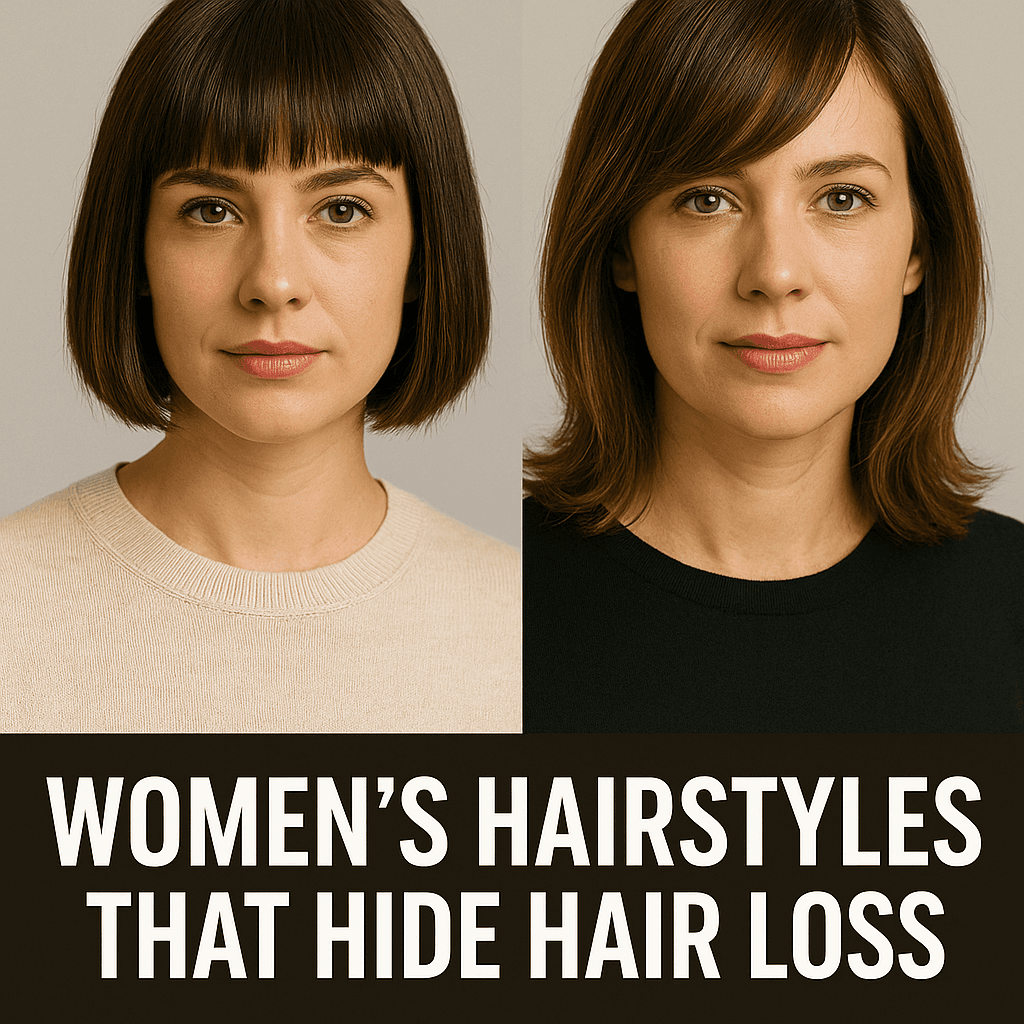
Curtain Bangs or Side-Swept Fringe (front thinning & wide part): Breaks up the hairline and disguises a widening part.
Style tip: Apply a light serum on the ends; avoid heavy oils at the roots.
Not every hair loss solution requires medication or surgery. For many people, the right styling products can make hair look instantly fuller and help camouflage thinning areas. These options don’t stop hair loss, but they can boost confidence while you explore longer-term treatments.
Hair fibers and powders are one of the most popular quick fixes. Made of keratin (the same protein as your hair), they cling electrostatically to existing strands, instantly filling in thin or see-through spots.
Volumizing shampoos and conditioners lift roots and add body without weighing hair down. For example, the Follicool Shampoo from HairDAO is designed to nourish hair while creating the appearance of more density.
Tinted sprays can also be effective, coating strands and lightly coloring the scalp to reduce contrast and make hair look thicker overall.
Not everyone wants to rely on medications or procedures. For many, accessories offer a simple, immediate way to disguise thinning areas while still looking stylish and confident.
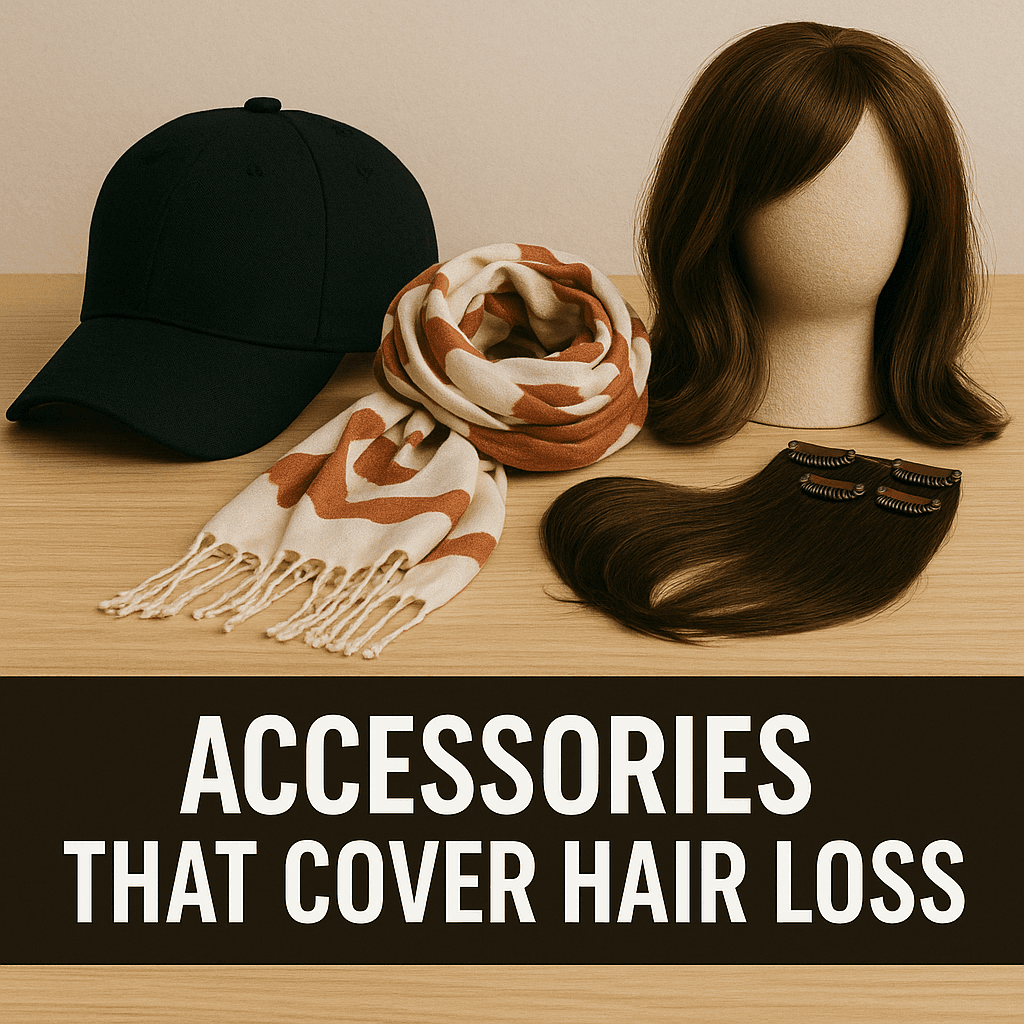
Hats, scarves, and headbands are easy everyday options that combine fashion with function, letting you cover thinning spots while expressing personal style.
Wigs and toppers have come a long way — high-quality human-hair wigs and lace toppers can blend seamlessly with natural hair, providing full or partial coverage depending on your needs.
Hair systems (sometimes called non-surgical hair replacement) are another advanced option. Unlike traditional wigs, they’re semi-permanent pieces bonded to the scalp, offering natural-looking density for men and women with significant thinning.
Clip-in extensions can add instant fullness and coverage, particularly for women with diffuse thinning, without the commitment of a permanent system.
In the age of selfies, Zoom calls, and social media, how you pose can make a big difference:
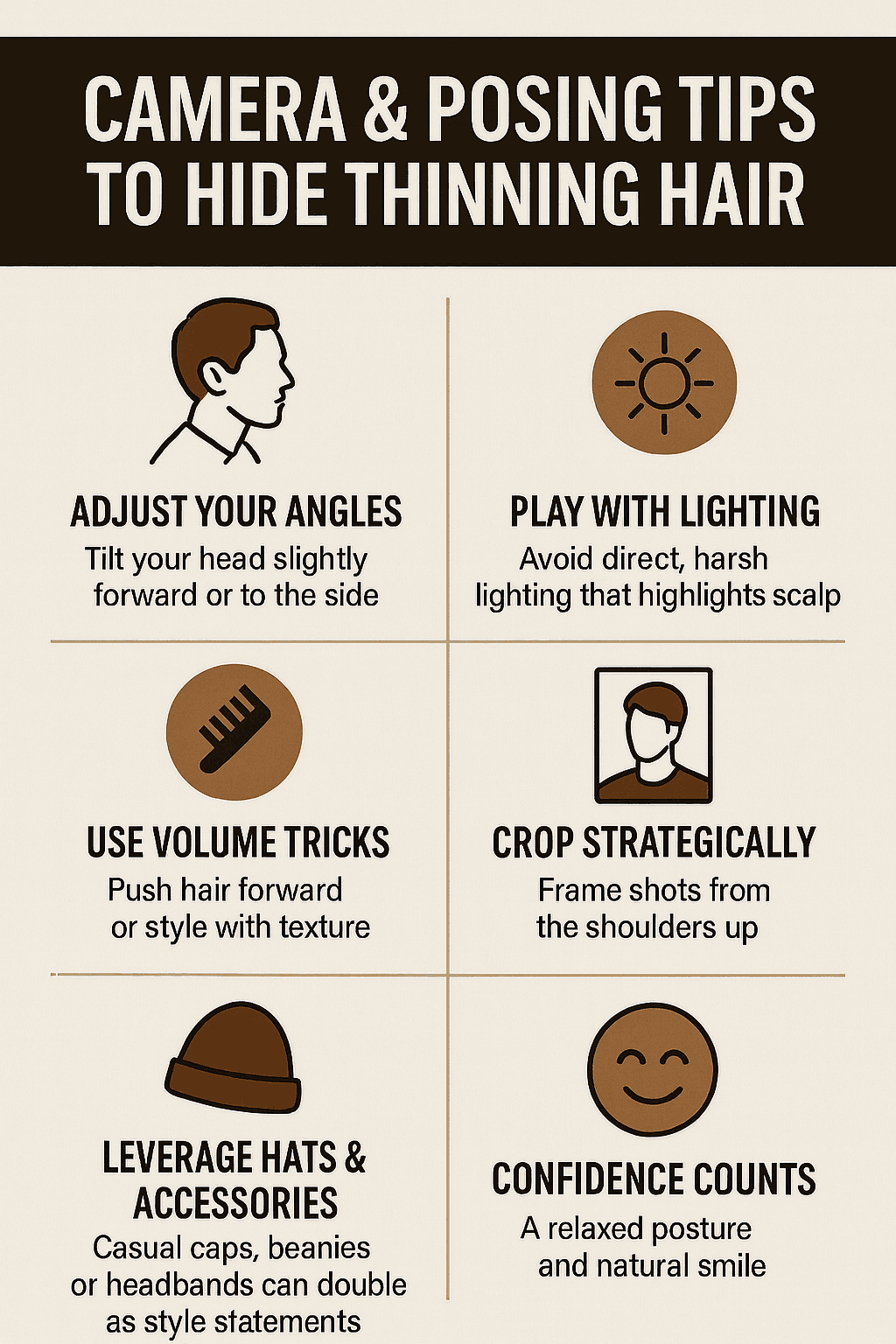
Adjust your angles: Tilt your head slightly forward or to the side to minimize visible thinning at the crown or hairline.
Play with lighting: Avoid direct, harsh lighting that highlights the scalp. Softer, angled light reduces contrast and shadows on thinning areas.
Use volume tricks: Push hair forward or style with texture (e.g., light tousling, dry shampoo, or volumizing spray) to reduce scalp exposure.
Crop strategically: Frame shots from the shoulders up or slightly zoomed in so focus stays on your face, not your hairline.
Mind your background: A busy or bright background can draw attention away from your hair, while darker backgrounds may make thinning more noticeable.
Leverage hats & accessories: Casual caps, beanies, or headbands can double as style statements while minimizing hair concerns.
Confidence counts: A relaxed posture and natural smile shift focus to your expression instead of your hair.
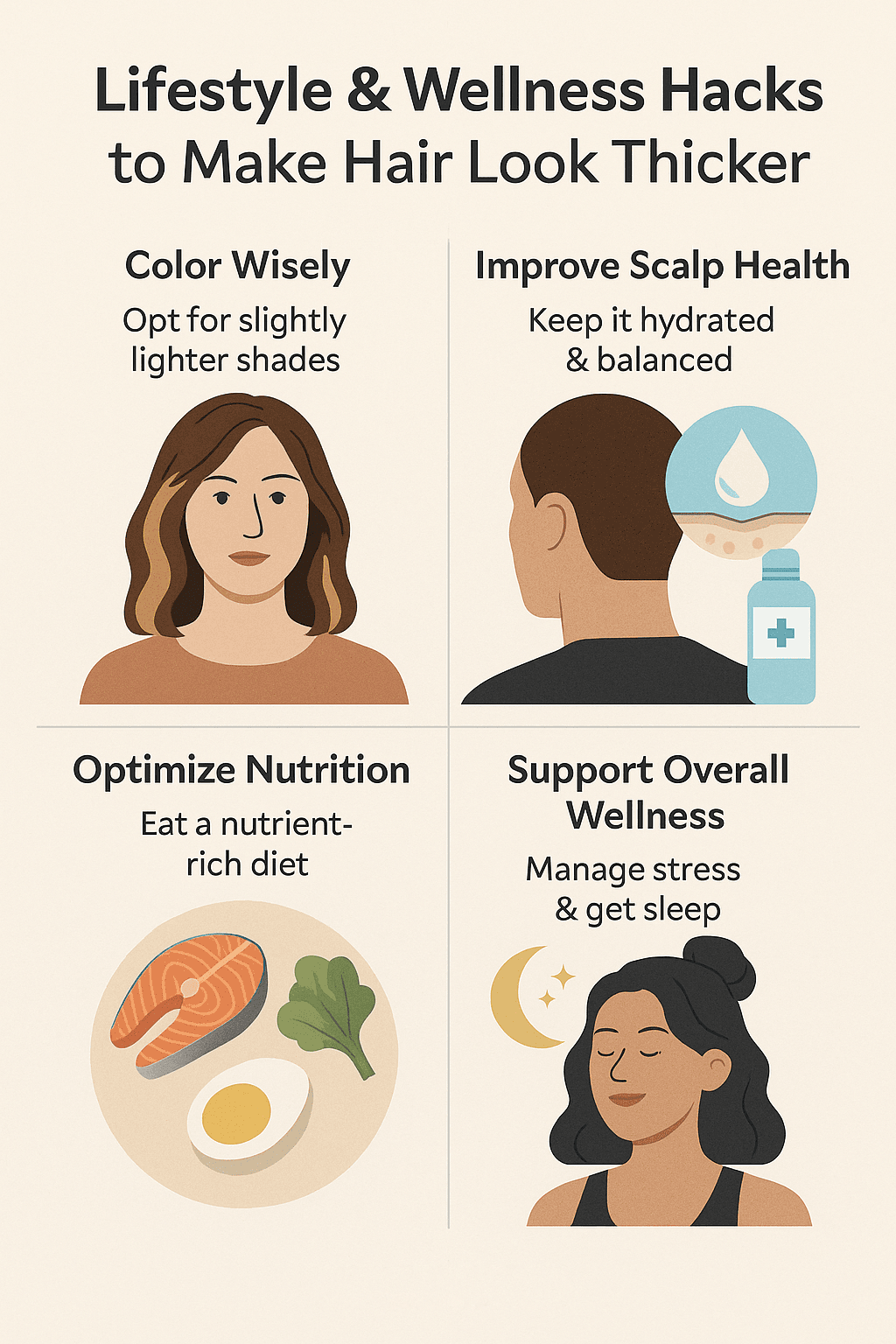
Color wisely: Dark roots against a light scalp make hair loss stand out. Opt for slightly lighter shades, highlights, or blended tones to soften contrast.
Improve scalp health: A hydrated, balanced scalp reduces flaking and redness that emphasize thin areas. Gentle exfoliation, soothing shampoos, and consistent moisturization help create a healthier foundation.
Optimize nutrition: Nutrients like biotin, zinc, iron, and vitamin D support stronger hair growth. Whole foods (leafy greens, eggs, fatty fish, nuts) or targeted hair-support supplements can help fill gaps in your diet.
Support overall wellness: Managing stress, getting quality sleep, and regular exercise all positively influence hair health over time.
While concealing hair loss is helpful, addressing the root cause can provide longer-term results. Common options include:
Minoxidil (topical or oral): FDA-approved for stimulating regrowth.
Finasteride and dutasteride: Prescription medications for men.
Growth Maxi: Formulated by Anagen, GrowthMaxi is for those who are pursuing maximum hair growth. It combines multiple treatments to stimulate hair growth through multiple mechanisms.
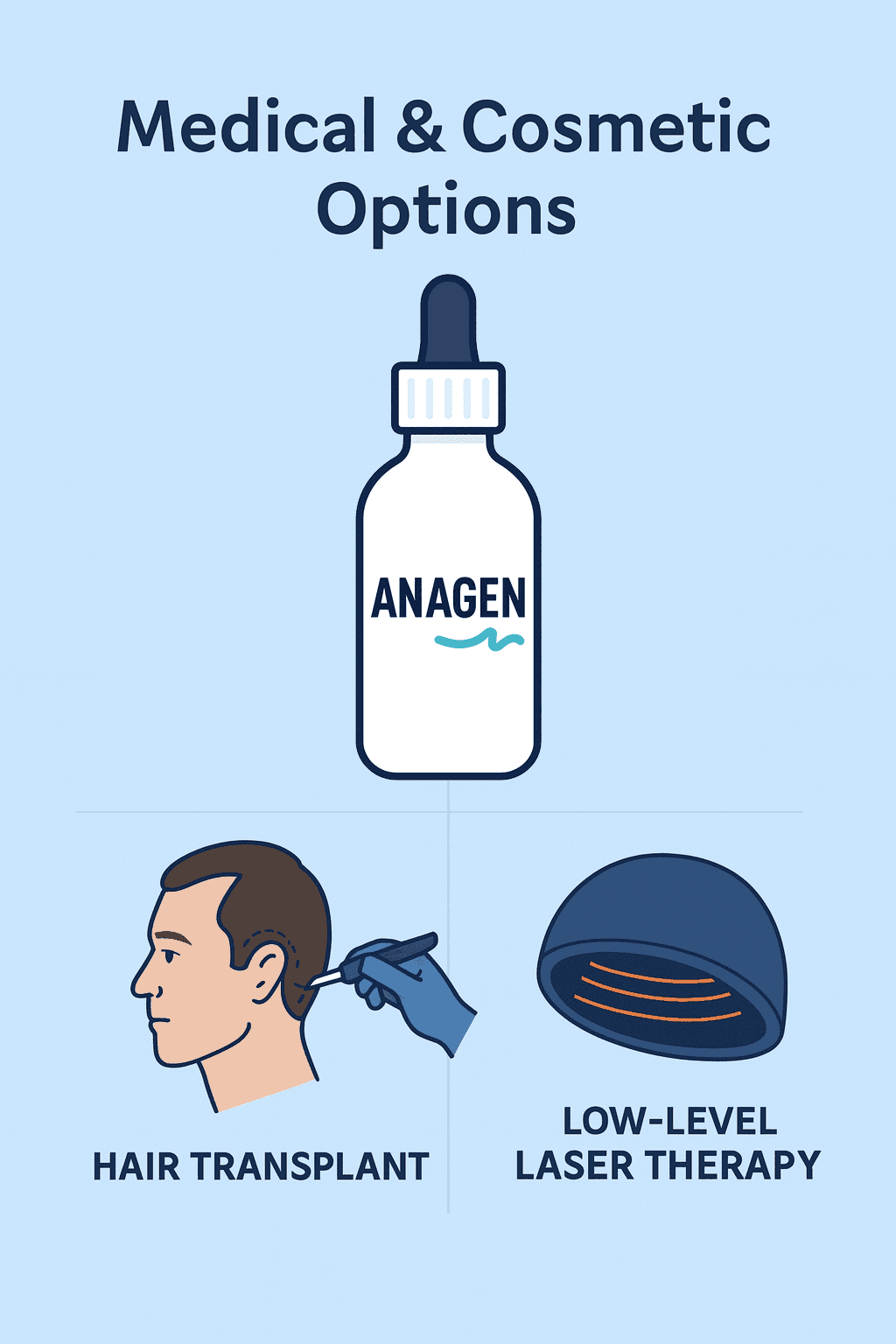
Low-level laser therapy (LLLT): At-home or in-clinic treatments that improve follicle activity.
Hair transplants: Surgical redistribution of follicles, offering long-lasting coverage in thinning or bald areas, though results may gradually change over time.
How can I style a receding hairline to look fuller? - Keep length short at the sides, wear a textured fringe or forward-styled crop, and use volumizing powder or matte clay. Avoid slick, shiny styles and hard parts that expose the hairline.
Are hats or beanies bad for hair loss? - Normal hat use doesn’t cause hair loss. Tight, traction-creating wear can irritate the scalp; choose breathable fabrics, proper fit, and keep the scalp clean to avoid buildup.
What camera angles and lighting hide hair loss on video calls? - Place the camera slightly above eye level and tilt your chin forward. Use soft, front-angled light (ring light with diffuser) and avoid overhead lighting that shines on the crown or hairline.
What treatments actually slow or reverse hair loss? - Evidence-based options include minoxidil (topical/oral), finasteride or dutasteride for many men, and prescription combination therapies such as Growth Maxi by Anagen. Hair transplantation may also be considered in some cases, but most clinicians recommend starting with medical treatments before exploring surgical options. Always discuss risks and the best fit with a qualified provider.
Can I combine fibers, concealers, and minoxidil? - Yes. Apply minoxidil first and allow it to dry completely. Then add fibers or concealers on top and finish with a light setting spray if desired. For best results, focus fibers/concealers on the hair shafts rather than the scalp to avoid buildup.
How to hide hair loss: men’s & women’s hairstyles, fibers and scalp concealers, color & parting hacks, camera-posing tips, and proven treatments.
Hair loss might be one of your biggest fears. You might have stared at it in the mirror this morning, using time and mental energy better spent elsewhere. By age 35, about ⅔ of all men experience some form of hair loss, so chances are you’re not alone! Still scary, but you don’t have to let it define your appearance. With the right strategies, you can hide thinning areas, boost your confidence, and even protect your scalp health along the way. Below, we’ve curated a list of some common ways you can help hide the thinning areas while still looking your best.
French Crop / Textured Crop (receding hairline): Short back and sides with a choppy fringe pulled forward to blur thinning temples.
Style tip: Use matte clay and rough-dry; avoid shiny pomades that expose the scalp.

Buzz Cut or High & Tight (general thinning/crown): Keeps hair very short, reducing contrast between scalp and hair for a fuller look. Cutting the sides shorter also makes the hair on top appear thicker.
Style tip: A clean fade from sides to top enhances the illusion of density.
Blunt Bob or Lob (shoulder-length, diffuse thinning): A blunt edge makes ends look thicker, while a lob adds weight without dragging hair down.
Style tip: Use a root-lift mousse and blow-dry with a round brush for volume.

Curtain Bangs or Side-Swept Fringe (front thinning & wide part): Breaks up the hairline and disguises a widening part.
Style tip: Apply a light serum on the ends; avoid heavy oils at the roots.
Not every hair loss solution requires medication or surgery. For many people, the right styling products can make hair look instantly fuller and help camouflage thinning areas. These options don’t stop hair loss, but they can boost confidence while you explore longer-term treatments.
Hair fibers and powders are one of the most popular quick fixes. Made of keratin (the same protein as your hair), they cling electrostatically to existing strands, instantly filling in thin or see-through spots.
Volumizing shampoos and conditioners lift roots and add body without weighing hair down. For example, the Follicool Shampoo from HairDAO is designed to nourish hair while creating the appearance of more density.
Tinted sprays can also be effective, coating strands and lightly coloring the scalp to reduce contrast and make hair look thicker overall.
Not everyone wants to rely on medications or procedures. For many, accessories offer a simple, immediate way to disguise thinning areas while still looking stylish and confident.

Hats, scarves, and headbands are easy everyday options that combine fashion with function, letting you cover thinning spots while expressing personal style.
Wigs and toppers have come a long way — high-quality human-hair wigs and lace toppers can blend seamlessly with natural hair, providing full or partial coverage depending on your needs.
Hair systems (sometimes called non-surgical hair replacement) are another advanced option. Unlike traditional wigs, they’re semi-permanent pieces bonded to the scalp, offering natural-looking density for men and women with significant thinning.
Clip-in extensions can add instant fullness and coverage, particularly for women with diffuse thinning, without the commitment of a permanent system.
In the age of selfies, Zoom calls, and social media, how you pose can make a big difference:

Adjust your angles: Tilt your head slightly forward or to the side to minimize visible thinning at the crown or hairline.
Play with lighting: Avoid direct, harsh lighting that highlights the scalp. Softer, angled light reduces contrast and shadows on thinning areas.
Use volume tricks: Push hair forward or style with texture (e.g., light tousling, dry shampoo, or volumizing spray) to reduce scalp exposure.
Crop strategically: Frame shots from the shoulders up or slightly zoomed in so focus stays on your face, not your hairline.
Mind your background: A busy or bright background can draw attention away from your hair, while darker backgrounds may make thinning more noticeable.
Leverage hats & accessories: Casual caps, beanies, or headbands can double as style statements while minimizing hair concerns.
Confidence counts: A relaxed posture and natural smile shift focus to your expression instead of your hair.
Color wisely: Dark roots against a light scalp make hair loss stand out. Opt for slightly lighter shades, highlights, or blended tones to soften contrast.
Improve scalp health: A hydrated, balanced scalp reduces flaking and redness that emphasize thin areas. Gentle exfoliation, soothing shampoos, and consistent moisturization help create a healthier foundation.
Optimize nutrition: Nutrients like biotin, zinc, iron, and vitamin D support stronger hair growth. Whole foods (leafy greens, eggs, fatty fish, nuts) or targeted hair-support supplements can help fill gaps in your diet.
Support overall wellness: Managing stress, getting quality sleep, and regular exercise all positively influence hair health over time.

While concealing hair loss is helpful, addressing the root cause can provide longer-term results. Common options include:
Minoxidil (topical or oral): FDA-approved for stimulating regrowth.
Finasteride and dutasteride: Prescription medications for men.
Growth Maxi: Formulated by Anagen, GrowthMaxi is for those who are pursuing maximum hair growth. It combines multiple treatments to stimulate hair growth through multiple mechanisms.

Low-level laser therapy (LLLT): At-home or in-clinic treatments that improve follicle activity.
Hair transplants: Surgical redistribution of follicles, offering long-lasting coverage in thinning or bald areas, though results may gradually change over time.
How can I style a receding hairline to look fuller? - Keep length short at the sides, wear a textured fringe or forward-styled crop, and use volumizing powder or matte clay. Avoid slick, shiny styles and hard parts that expose the hairline.
Are hats or beanies bad for hair loss? - Normal hat use doesn’t cause hair loss. Tight, traction-creating wear can irritate the scalp; choose breathable fabrics, proper fit, and keep the scalp clean to avoid buildup.
What camera angles and lighting hide hair loss on video calls? - Place the camera slightly above eye level and tilt your chin forward. Use soft, front-angled light (ring light with diffuser) and avoid overhead lighting that shines on the crown or hairline.
What treatments actually slow or reverse hair loss? - Evidence-based options include minoxidil (topical/oral), finasteride or dutasteride for many men, and prescription combination therapies such as Growth Maxi by Anagen. Hair transplantation may also be considered in some cases, but most clinicians recommend starting with medical treatments before exploring surgical options. Always discuss risks and the best fit with a qualified provider.
Can I combine fibers, concealers, and minoxidil? - Yes. Apply minoxidil first and allow it to dry completely. Then add fibers or concealers on top and finish with a light setting spray if desired. For best results, focus fibers/concealers on the hair shafts rather than the scalp to avoid buildup.