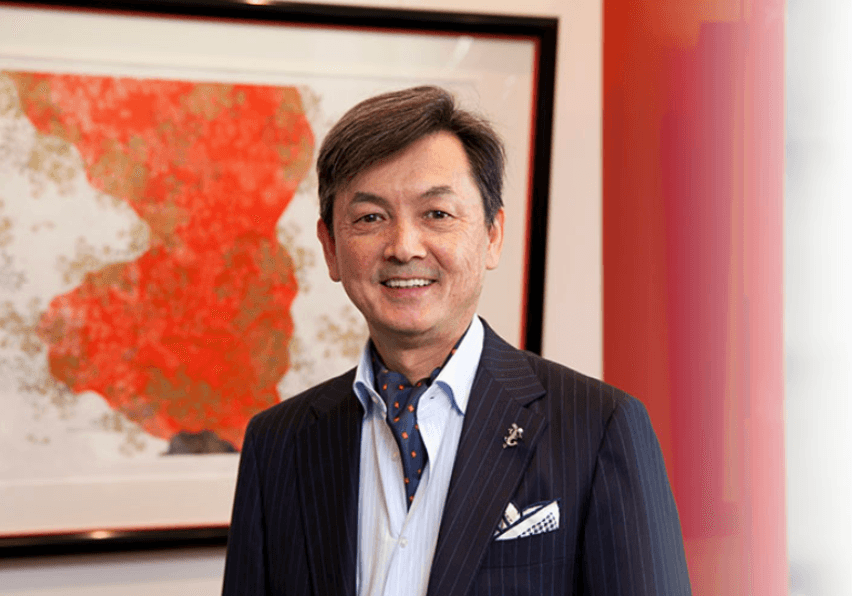
Dr. Takashi Tsuji is one of the earliest, and still the most advanced, scientists pursuing true hair follicle regeneration. After a decade in Japan’s pharma industry and long stints in academia and at the research powerhouse RIKEN, he now leads Organ Tech, a startup built around his lab’s breakthrough: turning a single donor follicle into hundreds of “hair germs” that mature into brand new, fully functional follicles once transplanted. In this interview with Andrew Verbinnen, Dr. Tsuji explains why regenerating whole follicles (not merely stimulating existing ones) can provide lifelong growth, outlines a three stage roadmap from cell-infusion therapy (target launch 2027-28) to full follicle transplants, and discusses the automation that could someday drive costs down to routine hair transplant levels. For anyone tracking the race toward hair cloning, his frank updates on timelines, clinical trials, and technical hurdles deliver a rare, straight from thesource look at where the field stands and where it’s headed next. Please enjoy
Andrew Verbinnen: Dr. Tsuji, so would you be able to tell us just a bit about your background and how you first got involved in regenerative medicine?
Takashi Tsuji: Let me introduce my career. First, after graduating from a Japanese university, I was involved in research and development at two Japanese pharmaceutical companies for a total of 10 years.. After that, I became a university professor for 13 years, and then worked at a Japanese national research institution (RIKEN) for 13 years, and I have been working at Organ Tech since last year.
The reason I got into regenerative medicine was that when I was doing research at university, I was involved in research on hematopoietic stem cell transplantation, so-called bone marrow transplantation and drug discovery using normal low-molecular-weight compounds.
In contrast to this being generally a symptomatic treatment, hematopoietic stem cell transplantation eliminates the disease of leukemia itself. I was drawn to the strength and completeness of regenerative medicine, and that's why I've been involved in it.
Andrew Verbinnen: Can you briefly just touch on the core mission of OrganTech and what sets your work apart from other efforts in the regenerative medicine field? Obviously there's other companies like Stemson Therapeutics who unfortunately is no longer in operation, but you're not the only one pursuing hair cloning anymore, even though you're probably one of the first. It would be great to hear about the core mission and what makes you guys different than the others.
Takashi Tsuji: The mission of Organ Tech is to create new technologies for organ regeneration and disseminate them to society. In comparison with other companies, I believe Organ Tech has the most realistic technology for regenerating three-dimensional organs, or organ primordia.
For example, organoid research using iPS cells is very important, but the size is still small, and it will take time to spread it further. Therefore, our research and development, such as hair regeneration and next-generation bio-implants that regenerate whole teeth. I believe that social implementation from this kind of research is a near-term technology.
Andrew Verbinnen: So for those unfamiliar with your hair regeneration project, what is the basic concept behind your approach and what makes it unique?
Takashi Tsuji: The uniqueness of our hair regeneration research is not so-called hair growth, like injecting cells into the scalp, but to completely regenerate the hair follicle itself that produces hair, to create them anew. That is the uniqueness of our technology.
Our technology regenerates the seeds of hair follicles that form during the fetal stage and transplants them into adults. Then, as if repeating the hair cycle, new hair is newly born.This is our originality and our overwhelmingly unique point.
Andrew Verbinnen: I know a lot of the people who are looking to get your procedure done whenever they get the chance. So since your 2020 projections, how has the estimated cost of the first commercial treatment changed? think last we had heard you had quoted something like 20 million to 40 million Japanese yen, which is 190,000 to $380,000 per today's exchange rates. Are you still thinking it would be able to be done for about that amount or has that changed at all?
Takashi Tsuji: First, as a new topic, we are now positioning the technology we announced in 2020 as the first generation. In our recent research, we have discovered new cells that act more efficiently on hair follicle regeneration. By combining these cells, this will be the second-generation hair follicle regeneration. I believe this method has become more realistic.
Using this method for in vitro culture, we can create hair follicles in vitro. We will publish this research result in a paper from this summer to autumn, so please look forward to it.
Regarding the basic cost, I can't give you an exact answer at this point, but since we are creating three-dimensional cells, the primordium of the hair follicle, the cost will likely be higher than normal regenerative medicine for now.。
I think it will be around the amount we talked about in 2020, but at the same time, we are also advancing an approach to reduce costs by fully automating the process. By advancing this, we believe it will be possible in the future to reduce the cost to about the same amount as hair transplant surgery.
Andrew Verbinnen: What is your current target timeline for commercial launch? Assuming, you know, assuming everything went according to plan.
Takashi Tsuji: Well... I just mentioned that we have first and second-generation hair follicle regeneration. The feature of the second generation is a method where a third cell is attached under the seed made from the first generation's epithelial and dermal papilla cells. This is the second generation, but we have found a new, third cell used in this second generation that further promotes hair follicle development.By using this cell, we think it can be used not only for male pattern baldness but also for telogen effluvium in women, where the subcutaneous fat of the scalp is said to become thinner. Therefore, targeting male pattern baldness and female hair loss,
As the first step toward practical application, we are considering conducting a clinical trial in Japan from the end of 2027 to 2028 for cell infusion therapy, where only the third cell is infused. For the second-generation hair follicle regeneration, we are aiming for 2028.
And for the third-generation hair follicle regeneration, we are proceeding with research and development with the aim of starting clinical research in 2029.
Andrew Verbinnen: What do you think the clinical trial process looks like? How many phases will be required? What will the size need to be of the clinical trials?
Takashi Tsuji : At this point, how we will proceed with clinical research is still undecided. In Japan, there are clinical studies as so-called clinical trials aimed at approval, and in the case of cell therapy, there are two types of medical research conducted with the approval of the Special Certified Committee for Regenerative Medicine.
Among these, we would like to start clinical research with the approval of the Special Certified Committee for Regenerative Medicine, which allows for easier trials.
The design will be decided from now on, but we want to proceed by securing enough research, number of hairs, and number of people to properly collect data on whether hair actually grows, the quality of the hair, and the hair growth rate.
Andrew Verbinnen: And then how many hair germs or follicles would you plan to implant per patient in a human clinical trial?
Takashi Tsuji: At the very beginning, we will conduct human clinical trials with an emphasis on safety, so considering that we need to get statistical data, the minimum number of hairs required for safety is demanded in clinical trials. Therefore, I think we will transplant approximately 100 to 200 of our regenerated hair follicle primordia per patient.
Andrew Verbinnen : And then after Japan, is there another region that you would look to for clinical trials as the next region?
Takashi Tsuji: We are currently thinking of connecting with interested people around the world and conducting clinical research globally. We are looking for partner companies to advance clinical trials. We are not limited to Japan; we receive emails from people all over the world asking, "When will it start?" (laughs)
So, through activities like yours, if there are interested companies around the world, we'd like them to contact us. If we can advance similar clinical research globally, I believe we can be of help to many people on a global scale.
Andrew Verbinnen: Yeah! Moving on to the the scientific methodology and the distinction. Could you explain how your method of hair follicle regeneration differs from the approaches like FUKADA's or past efforts for biadherins?
Takashi Tsuji: This is probably not for me to compare; if you investigate scientifically, you will see that our technology is the most advanced in the world. Therefore, the research from the researchers and companies you mentioned are often things that came after ours, and since no one else has succeeded in regenerating the entire hair follicle, I have no doubt that we are the most advanced.
Andrew Verbinnen: When you are actually doing this procedure on human will you implant lab grown full follicles or is it just the hair germs that get inserted into the scalp?
Takashi Tsuji: Good question. With the first generation, second generation, third generation the cell input method is cell infusion therapy- the infusion of cells that promote hair follicle development, or improve the condition of subcutaneous fat, we directly inject the cultured cells into the scalp. This activates the originally existing hair follicles, making the hair thicker and ensuring a full hair cycle. This is the cell infusion therapy we want to conduct in the latter half of 2027.
The second generation is a kind of hair follicle seed called an organ primordium, the hair follicle germ. We are considering transplanting the regenerated version of this, so we transplant the regenerated hair follicle primordium, the hair follicle germ itself, and let it develop within the body. This is the second generation.
The third generation involves growing this second-generation hair follicle germ in a petri dish to become a regenerated hair follicle, and in some cases, transplanting it with the hair already grown. I believe it will evolve into a transplantation method similar to hair transplantation.
Andrew Verbinnen: Great. And so are the lab-grown hair follicles, are they able to regenerate all the necessary cell populations, including the dermal sheath and the muscle attachments?
Takashi Tsuji: Of course, not only is the entire structure of the hair follicle correct, but the most excellent thing is that when it regenerates from the regenerated hair follicle primordium, it induces the surrounding arrector pili muscles, and it also induces nerve innervation, so the hair flow, the direction of the hair, becomes the person's original one. Furthermore, it should become a hair follicle that feels the sensation of being touched.
This has all been clarified histologically in previous papers, proving that it is no different from a natural hair follicle, that it is exactly the same.
Andrew Verbinnen: And then have you guys confirmed the replenishment of dermal stem cell populations in the bulge dermal cup after the implantation of the hair follicle hair germ?
Takashi Tsuji : Yes, of course. All live cell populations are regenerated, so all the hair root sheath cells in the hair bulb are also regenerated.
Because all of these are present, the hair cycle rotates stably. Therefore, our hair follicle germ transplantation is a one-time procedure. Our method promises lifelong hair growth from that single transplant.
Andrew Verbinnen: Nice! So how do you maintain the inductivity of both the epithelial and mesenchymal cells after a couple of passages, which can sometimes be an issue? As much as you can say on that.
Takashi Tsuji: A feature of our hair follicle regeneration is that we can multiply one hair follicle into 50 to 100 hair follicles. In the case of normal hair transplantation, you cannot increase the number. We have created a technology that can stably increase it. Within that, as you asked, it took us 7 years to establish the technology to grow stem cells in vitro.
The biggest reason we were able to overcome the challenges for both epithelial cells and dermal papilla cells is our cell manipulation method and a specialized culture medium. Without these two methods, it's not possible to amplify cells in vitro like we do.
I believe this shows why many people have not been successful with hair follicle regeneration and why only our group has succeeded.
Andrew Verbinnen: How significantly would improved epithelial scalability reduce the cost or increase the treatment feasibility?
Takashi Tsuji: Scalability and cost are indeed closely related. However, for a single basic procedure/treatment, if we can, for example, take 100 hair follicles and multiply them 100-fold in 3 weeks, with our technology, it would be 100-fold in 3 weeks, and with that method, 10,000 regenerated hair follicles should grow.
In terms of number of hairs, I think it would probably be 20,000 hairs growing, in that case, even if there was no hair on this entire crown area, that's 30,000 hairs. We believe that the technology of taking 100 hair follicles from the back of the head and transplanting them will be sufficient for treating many different people. The cost is basically when you consider them as one unit.
If more hairs are needed, the cost for cultivation will be added, so that part will be doubled, the cultivation period is the same. We will basically increase the number of follicles to be taken, so considering that effort, the cost will change depending on how many times the unit of follicles you take and how many you want.
Andrew Verbinnen: I believe that you guys had publishes that you had been able to in these Transplanted follicles to see three hair cycles. Have you Observed any more than three hair cycles Or sort of what percentage of and if so what percentage of the hair follicles survived beyond that third cycle?
Takashi Tsuji: We have confirmed more than three hair cycles. Follicles that go through the hair cycle, basically 70% to 80% or more of them will cycle, so the number doesn't decrease drastically.
Andrew Verbinnen: And do the regenerated hair follicles maintain a consistent quality in subsequent cycles or is there a degradation?
Takashi Tsuji: At least in the case of studies in mice, the hair cycle continues stably after a single transplant as long as the animal is alive.
At that time, if you ask whether the quality of the hair changes drastically, there is no extreme change. However, considering that this will continue until death, even mice age and the environment itself deteriorates, I speculate that the hair becomes age-appropriate accordingly. We haven't compared the exact percentage.
Andrew Verbinnen: Will you or would you plan to screen for potentially cancerous or genetically unstable cells prior to implant implantation?
Takashi Tsuji: We are not considering screening and removing dangerous cells for each culture in advance. Rather, we want to carefully trial cell culture with various patients and see if cancer occurs.
As with our past research, the risk of cancer is extremely low because it's only about 3 weeks of somatic cell culture. It's completely different from the cancer risk when using iPS cells or ES cells. For example, culturing epidermal cells for patients with severe burns is done for 3 weeks. There are no reports of this causing cancer.
This is the biggest advantage of using somatic cells, your own cells. So, we will observe this issue of cancer carefully,
Andrew Verbinnen: Have you explored whether mesenchymal or dermal papilla cells can be profiled for androgen resistance?
Takashi Tsuji: We haven't trialed this screening method itself in humans yet, but since we take hair follicles from the back of the head, it's almost certain that they are androgen-resistant. Basically, hair from the back of the head does not fall out. Therefore, the dermal papilla cells will proliferate according to the androgen resistance of the place they were taken from, the fate of their original location.
We have confirmed this in mice by taking hair from various parts, so in humans as well, they can be amplified in an androgen-resistant state, and after transplantation, I believe it will result in a state where hair with the fate of the occipital region grows in the transplanted area.
Andrew Verbinnen: Would a patient with Dupa diffuse un-patterned alopecia, like my co-founder Andrew Bakst has, where you're thinning all throughout the scalp instead of in concentrated areas, including from the donor area?
Takashi Tsuji: I am not a medical doctor myself, so determining the correct application for different types of hair loss disorders, that decision will be made in consultation with clinical physicians.
Andrew Verbinnen (29:57) Alright, and so, you know, obviously all of our fans care, you know, first and foremost about hair, but I think one of the really, really cool things about Organ Tech is that there are broader implications than just being able to clone hair follicles. I always say that, the hair follicle is such a complex mini-organ and if you could figure out how to clone that, you can probably clone a lot of other things. It might be interesting just to hear a little bit about your work with your work with teeth, what you're planning, what you've shown there and any organs that you would target after teeth and hair as well.
Takashi Tsuji: Thank you for looking up our past research and work so well. Actually, it was our team that made it possible to create teeth using cells that are the basis of fetal teeth, and to grow regenerated teeth. The regenerated tooth is a complete tooth of your own, with the surrounding periodontal ligament and even nerves inside. At this time, the direction in which the tooth erupts is there are these two seeds made from two types of cells, epithelial and mesenchymal cells. It grows in the direction of the epithelial side.
So, when you transplant, if you bring the epithelium in the direction you want it to grow, it will grow in that direction. Also, the interval (at which teeth erupt) can be controlled by the spacing of the seeds.
Then, the size of a single tooth is called macromorphology within morphology. The size and the pointed part in the tooth, corresponding to a molar, is called micromorphology. Therefore, this size controller depends on the contact area of the two (seeds), the overall size, and the number of pointed parts of the tooth that will grow depends on the size of the plate.
Therefore, the size is controlled by how the tooth primordium, the so-called tooth germ, is made. There are two reasons why we shifted from this as a realistic treatment method to the development of implants with a periodontal ligament. One is that the cells for regenerating teeth only exist during the fetal period.To do that, you would have to make them from ES cells or iPS cells, and there is a risk of cancer. No one has succeeded in inducing them yet.
The second challenge is a big one, but it takes 5 years for a tooth to grow. For example, if you transplant a seed (tooth germ) and are told, "Your tooth will grow in 5 years," would you be convinced? In that case, it's a bit unrealistic as a treatment method.
Hair is different. Hair has a hair cycle, so epithelial stem cells are stored in the bulge region, and the dermal papilla as mesenchymal stem cells, throughout life. Only hair stores the cells that can regenerate the entire organ. All other organs only have them during the fetal period, so if they are lost, transplantation is the only option.
So, for hair, we use our own regenerative stem cells, but for tooth regeneration, although our technology technically demonstrates tooth regeneration, if we think of it as a realistic treatment, the inside is titanium, and the problem with current osseo-integrated implants is, the bone comes right next to this implant. Natural teeth have a ligament called the periodontal ligament in between.. If we can regenerate this ligament, it's the same as regenerating the whole tooth. Therefore, we are developing an implant that includes a periodontal ligament, and clinical trials have started in Japan. If this method becomes possible, it will be a game-changer for implant treatment, and I believe it will be recognized worldwide that regenerating a whole tooth means creating an implant with a periodontal ligament.
Andrew Verbinnen: Well, thank you so much. This has been amazing. I don't necessarily know if you realize how many fans you have in the United States. This was one of the most highly anticipated interviews we've ever done. So with that said, thank you Dr. Tsuji Yamaguchi for coordinating and everything. The best dressed man of hair loss. We're happy to have him here with us. So thank you so much.
Big Thank you to Dr. Takashi Tsuji for the interview and Yoshitake Yamaguchi for the translation !