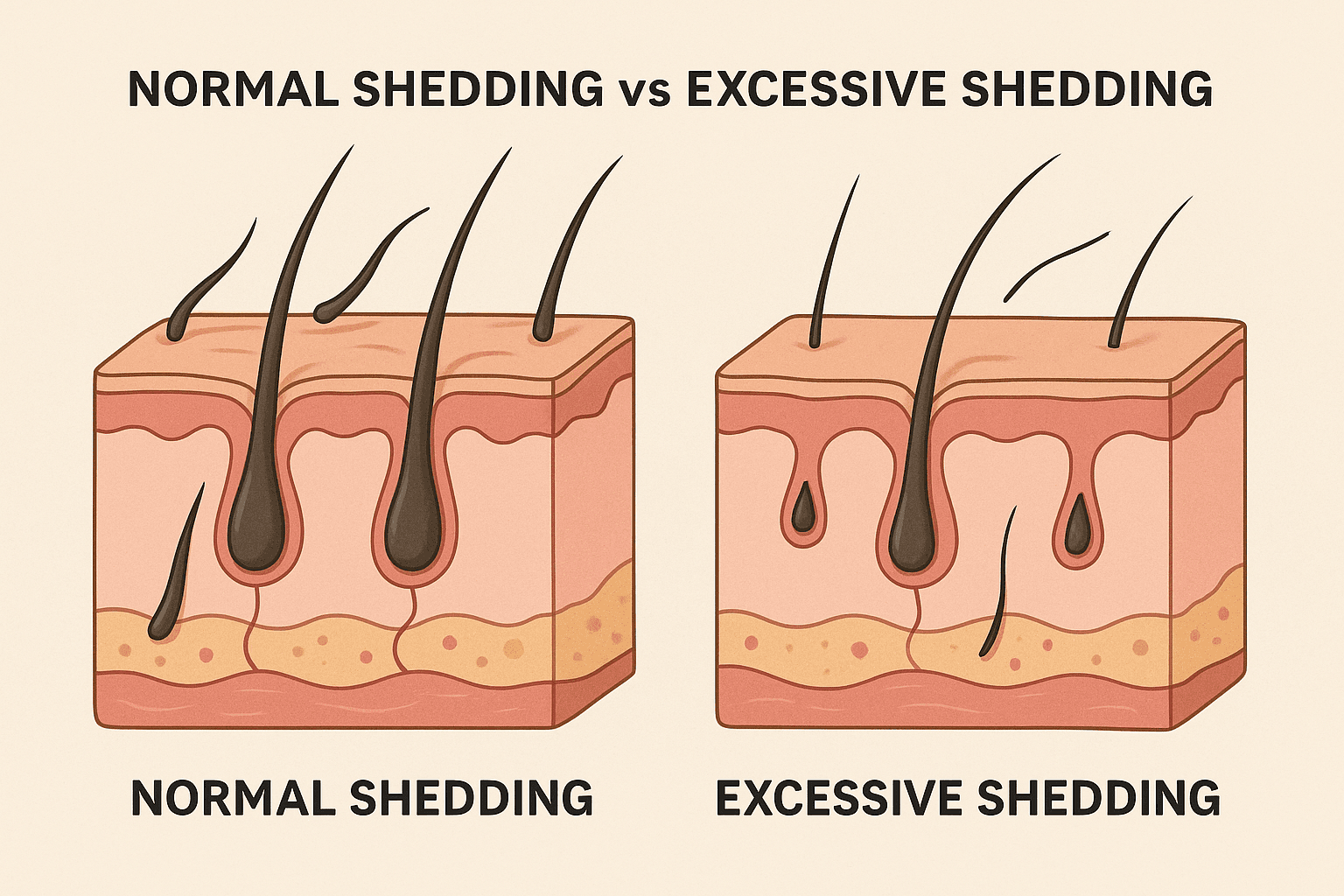
How can you tell if you’re losing your hair? The first signs of hair loss are often excess shedding on your pillow or in the shower. However, these patterns are usually only obvious if you’re losing hair quickly. Since most people naturally shed up to 100 hairs per day, it can be hard to know whether 120 hairs is normal variation or an early sign of balding.
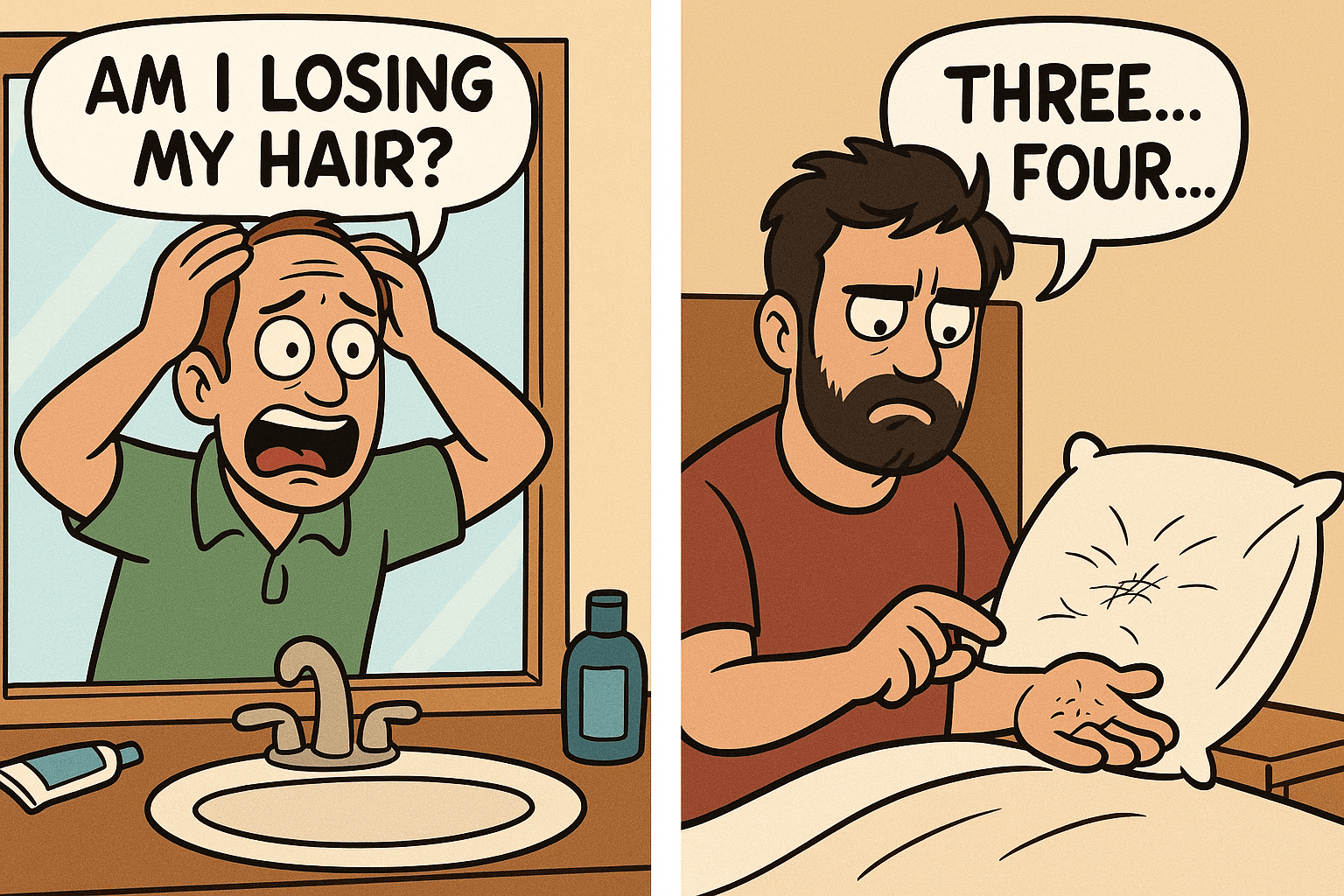
For most men and women, hair loss starts gradually. Patients often fall into the mild increase in daily shedding category, with hair density declining slowly over one to three decades. That’s why relying only on pillow or shower hair counts is unreliable for detecting early hair thinning.
The Most Accurate Way to Detect Hair Loss: TrichoScan Analysis
The best way to tell if you are losing your hair is with a trichoscan hair analysis. A trichoscan provides a baseline measurement of your hair count and hair shaft diameter, which can then be compared every three months. If your counts are decreasing, it’s a clear sign of progressive hair loss. If they’re stable or improving, you know your treatments are working.
At Anagen, we offer complimentary trichoscan analyses to all customers, so you can track your progress with clinical accuracy. If you’re interested, reach out to us at andrew@anagen.xyz and we’ll get you set up.
What If You Don’t Have Access to a Trichologist?
If you don’t have access to a trichologist or trichoscan, the next best method is to track your hair at home with consistent high-quality photos.

Tips for DIY tracking:
- Use the same room, lighting, and time of day each time.
- Capture your hairline (pull hair back from temple to temple).
- Photograph your crown (top of head).
- Include side angles, especially to track diffuse unpatterned alopecia (DUPA), which can affect the sides and back as well as the top.
Retake photos every three months. This creates a visual record of whether your hairline recession, crown thinning, or overall density is changing over time.
We’d also recommend uploading your pictures to our website via the Anagen portal to get a second opinion on the progression of your hair loss.
Other Signs of Hair Loss
In addition to shedding and thinning, you may notice:
- Recession at the temples or frontal hairline changes.
- Patches of thinning hair or widening part lines.
- Scalp becoming more visible under bright light or in the mirror.
Many people also ask:
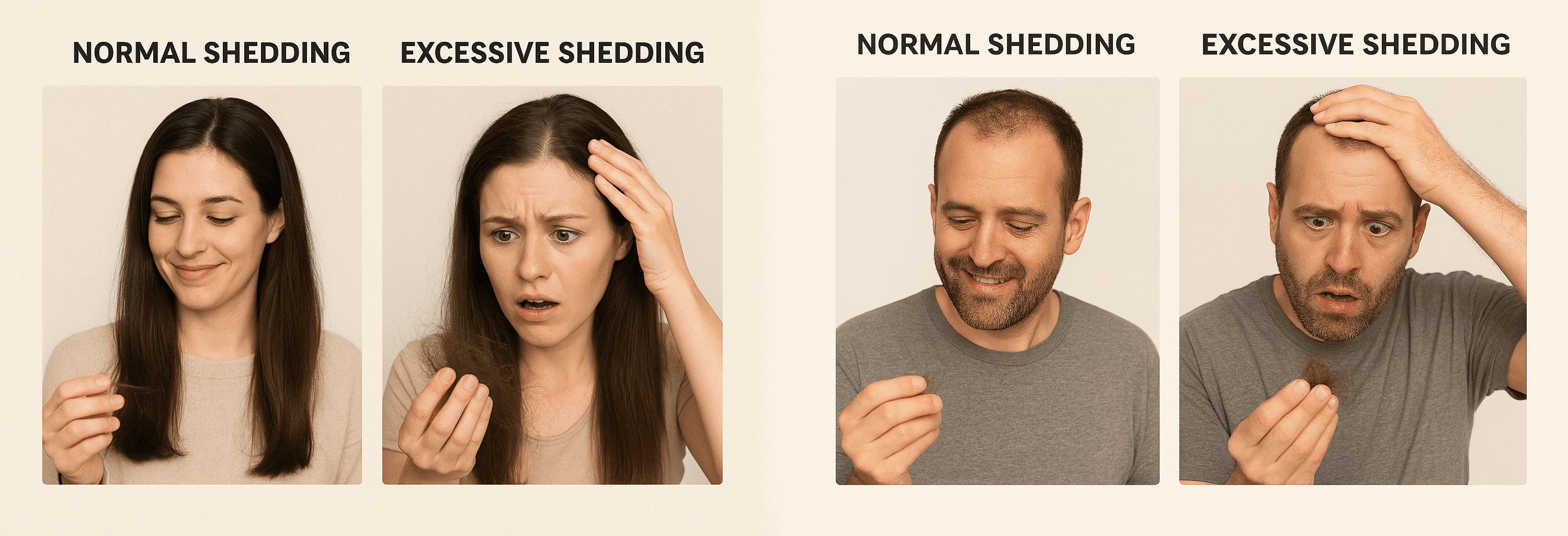
- Is shedding 100 hairs a day normal? (Yes, up to 100 is within range, consistent increases can indicate hair loss.)
- When should I worry about hair loss? (If you see ongoing thinning, visible scalp, or family history of baldness, start tracking right away.)
While some changes may be related to natural hair cycles, most progressive trends are due to pattern hair loss (androgenic alopecia). The longer you wait, the harder the hair loss is to reverse. Each follicle emits proteins that influence the surrounding scalp environment; the fewer follicles remain, the harder it is to stimulate regrowth.
Bottom Line
If you’re wondering “Am I losing my hair?” the most reliable answer comes from a TrichoScan baseline with follow-ups every three months. For Anagen customers, these are available free of charge. If a TrichoScan isn’t available to you, tracking your progress with high-quality photos is the next best option.
Early detection is key. The sooner you identify and treat hair loss, the better your chances of maintaining and regrowing your hair. Don’t leave it up to guesswork. Book a data-backed assessment with Anagen today!

FAQs About Hair Loss
How do I know if I’m really losing my hair?
Most people shed 50–100 hairs daily. If you notice consistent thinning, visible scalp, or hairline changes, that’s a sign of early hair loss.
Can women experience the same type of hair loss as men?
Yes. Women often notice diffuse thinning across the scalp rather than a receding hairline.
What’s the most accurate way to detect hair loss?
TrichoScan analysis gives the most reliable measurement of hair density and shaft thickness.
What if I don’t have access to a trichologist?
High-quality photos taken every three months under the same lighting can help you track changes.
Does hair loss always get worse over time?
Progressive hair loss typically worsens if untreated. Early detection and intervention improve the chances of maintaining and regrowing hair.